
Curatorial Review
by Oleksandr Dyvnich
Painting as Encounter: Cynthia Zhang and the ABYSS Framework
Cynthia Zhang (b. 1992, China) works between Hong Kong and Shenzhen, developing a painting practice that resists description as either purely abstract or purely figurative. Her canvases — Night Camellia, The Unseen Pulse, Between the Breaths of the Waves, Blue Jacaranda, SAMSARA — are better understood not as finished images but as residues of a process the artist calls ABYSS: an evolving artistic-philosophical framework built through painting, writing, and sustained visual research rather than fixed doctrine.
This is consistent with Zhang’s account of painting as ‘a way of entering into processes of change’ rather than representing a world already settled.
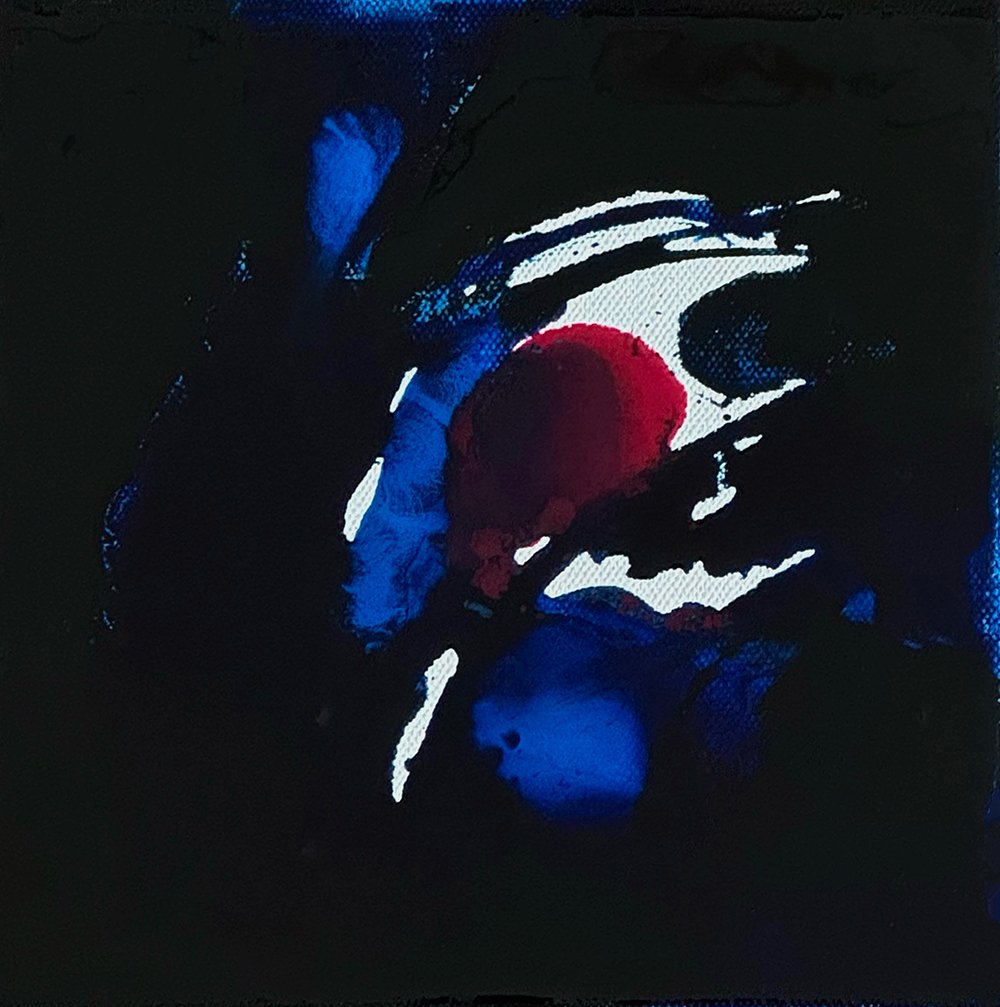
Cynthia Zhang | Night Camellia | 2026
Darkness as Depth, Not Absence
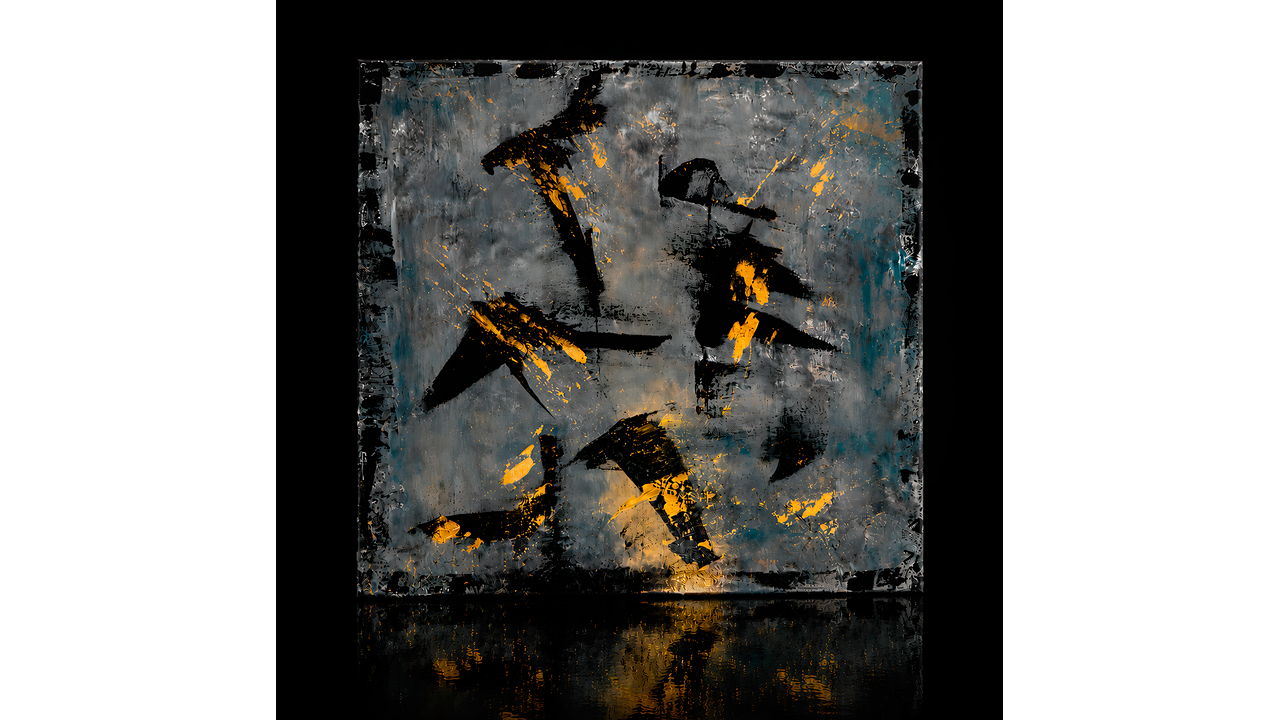
The most consistent curatorial problem ABYSS poses is how to read darkness. In Night Camellia and The Unseen Pulse, near-black grounds are not voids awaiting content; they behave as active fields, holding pressure until a red or cobalt form surfaces through them. Zhang’s own writing frames darkness as ‘a space of depth and possibility,’ and the paintings enact this literally — colour does not sit on top of black but appears to be released from within it, as though the ground were a medium of gestation rather than a background. This inverts a familiar hierarchy in abstract painting, where darkness typically recedes and colour advances; here darkness is generative, and the paintings ask to be read as records of emergence rather than compositions of contrast.
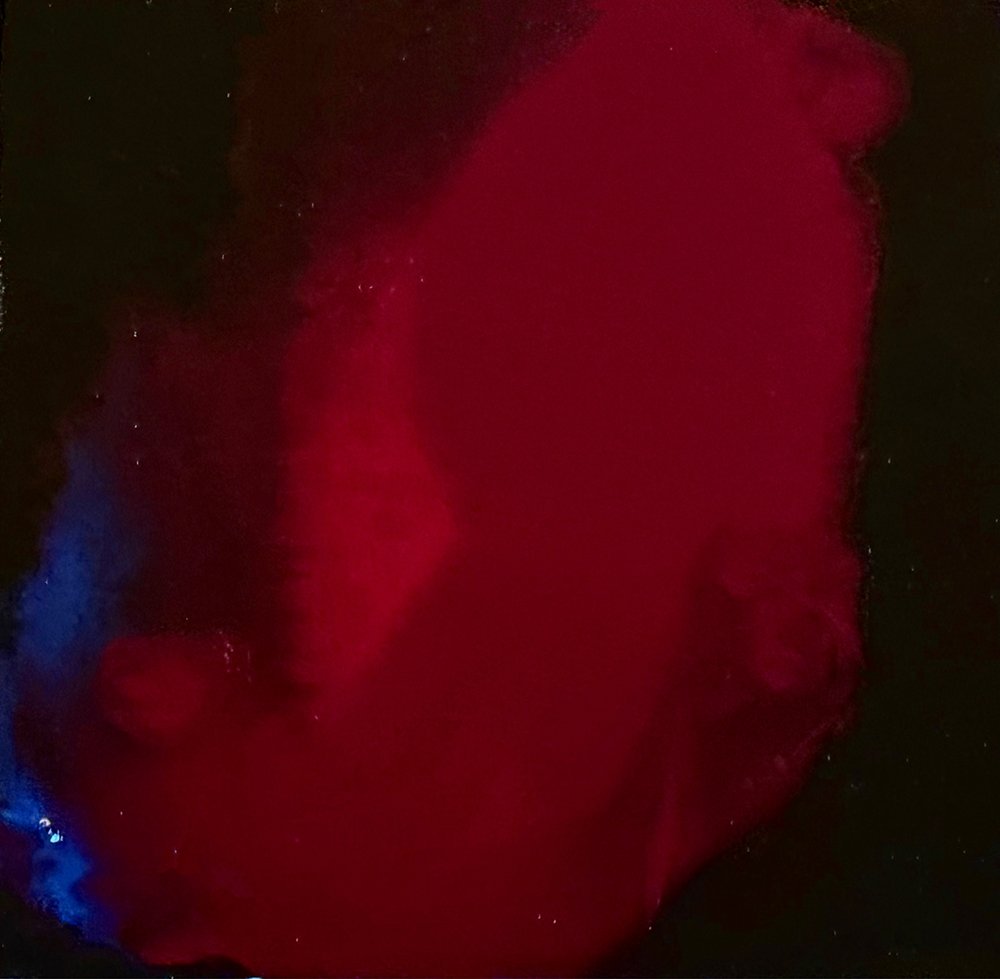
Cynthia Zhang | The Unseen Pulse | 2026
Perception as an Unfinished Process
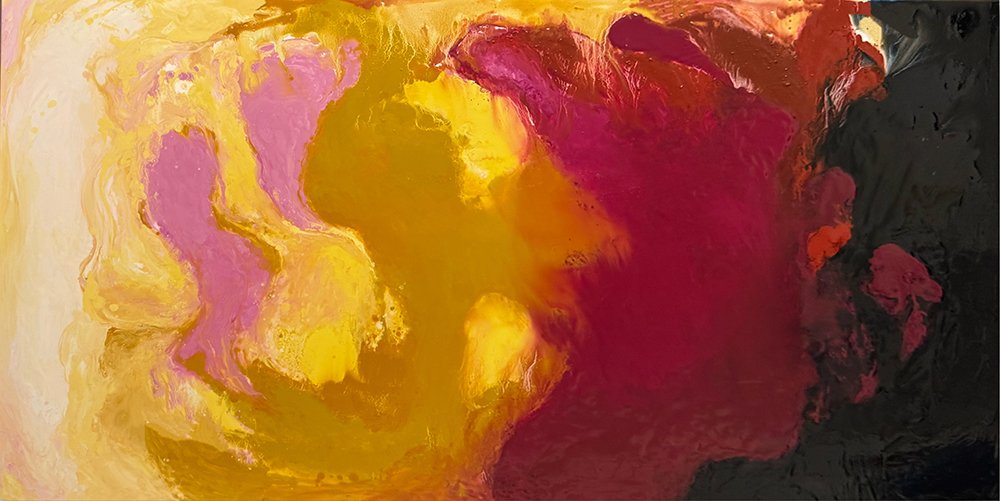
ABYSS explicitly rejects a fixed image as a starting point, and this is visible in how forms in Zhang’s work refuse full resolution. SAMSARA, the most saturated and warm-toned of the group, and Between the Breaths of the Waves, with its oceanic blue-greens, both stage a similar operation: a recognisable register — flower, wave, body, weather — becomes momentarily perceptible before dissolving back into gesture. This is consistent with Zhang’s account of painting as ‘a way of entering into processes of change’ rather than representing a world already settled.
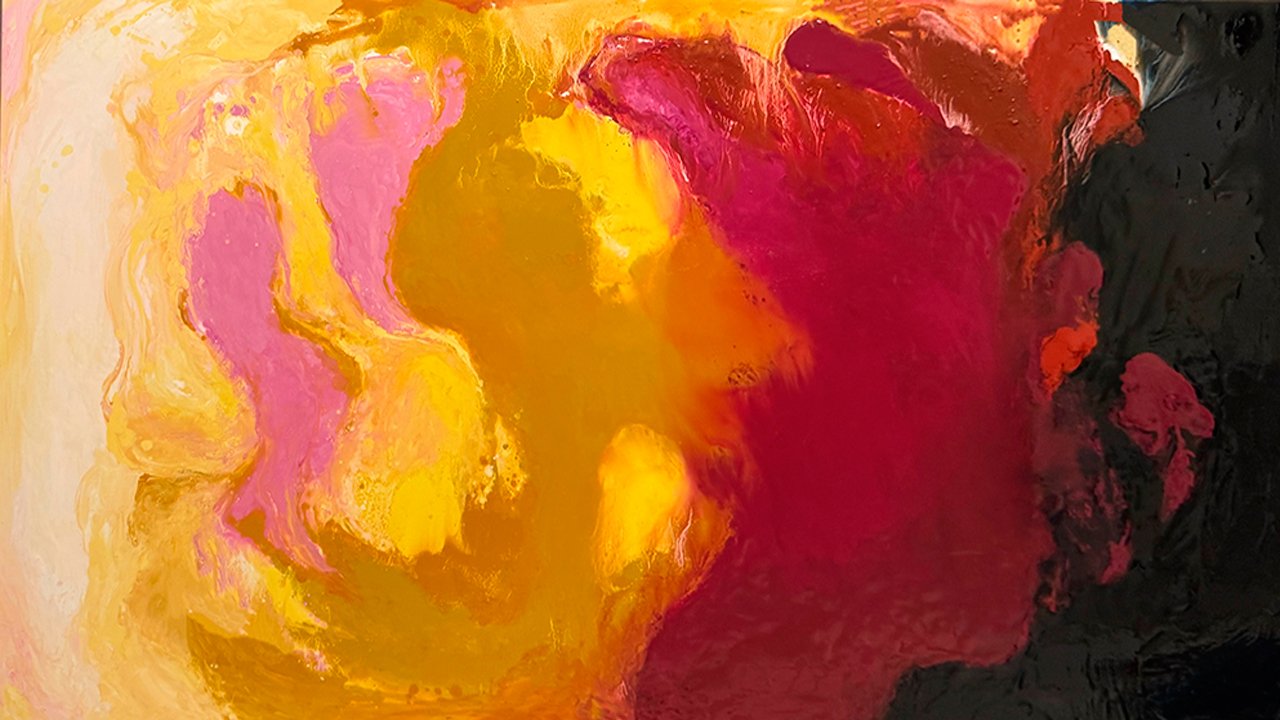
Cynthia Zhang | SAMSARA | 2025
The curatorial implication is that these works should not be evaluated for how convincingly they resolve into an image, but for how persuasively they sustain the threshold state between visibility and dissolution — a threshold ABYSS treats as the actual subject of the work.
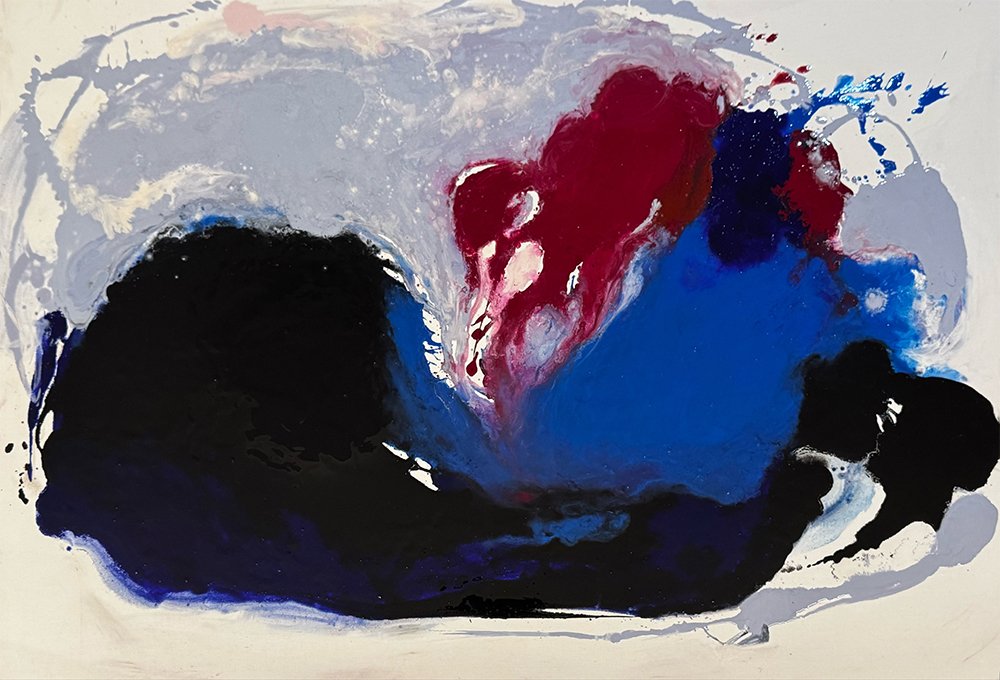
Cynthia Zhang | Between the Breaths of the Waves | 2025
Material Dialogue over Compositional Control
Blue Jacaranda, with its atmospheric layering of teal, green, and diffused light, demonstrates the intuitive, responsive method ABYSS describes: the artist reacting to what the material does rather than imposing a predetermined structure. Fluid pigment, pooling, and bleed are left legible as evidence of process, positioning each canvas as a document of a specific encounter between hand, material, and time rather than a repeatable formal exercise. Read across the five works, a research trajectory emerges — from the compressed, almost bodily intensity of Night Camellia and The Unseen Pulse toward the expansiveness of Blue Jacaranda and SAMSARA — suggesting ABYSS is less a fixed visual signature than a developing inquiry into how vitality becomes perceptible.
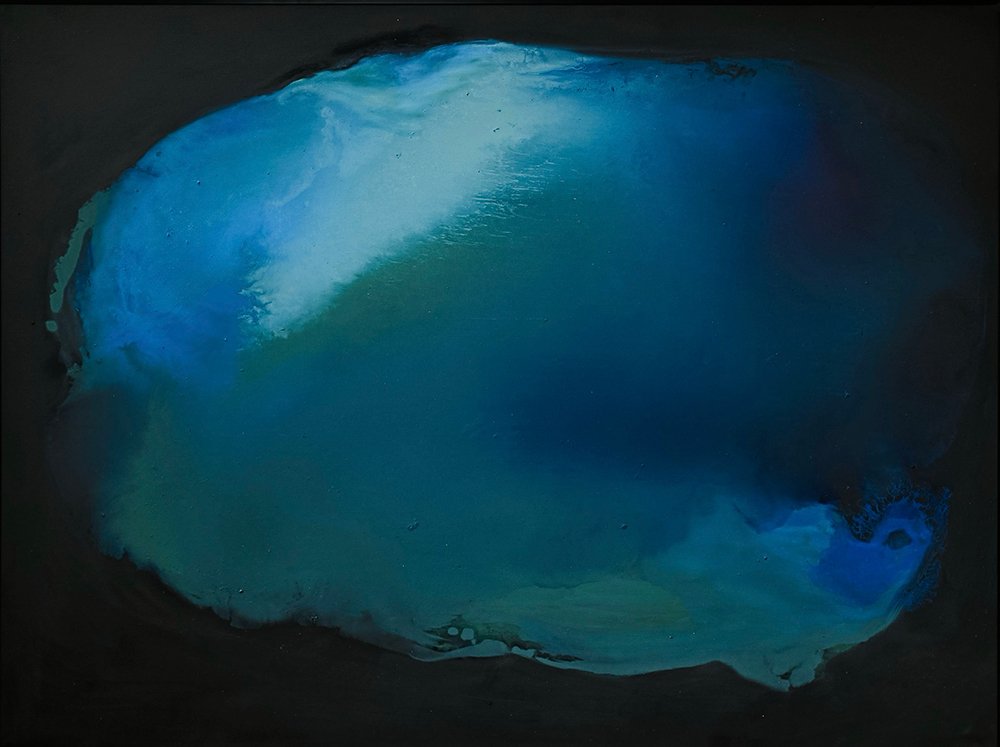
Cynthia Zhang | Blue Jacaranda | 2025
Curatorial Assessment
What distinguishes this body of work is its explicit philosophical scaffolding: ABYSS gives the paintings a shared conceptual stake — perception, transformation, incompleteness of meaning — without reducing individual canvases to mere illustrations of that idea. The strongest works (Night Camellia, SAMSARA) are those where material behaviour and conceptual claim are most tightly bound, where darkness genuinely functions as depth rather than device. The framework’s openness is also its risk: as ABYSS evolves through practice, its coherence will depend on Zhang sustaining the tension between intuitive process and legible conceptual return.
The strongest argument is not to receive ABYSS as finished doctrine but to exhibit it as a live research question — the dark paintings stating the thesis, the chromatic ones testing it, the viewer completing the encounter the work leaves open.