
Biography
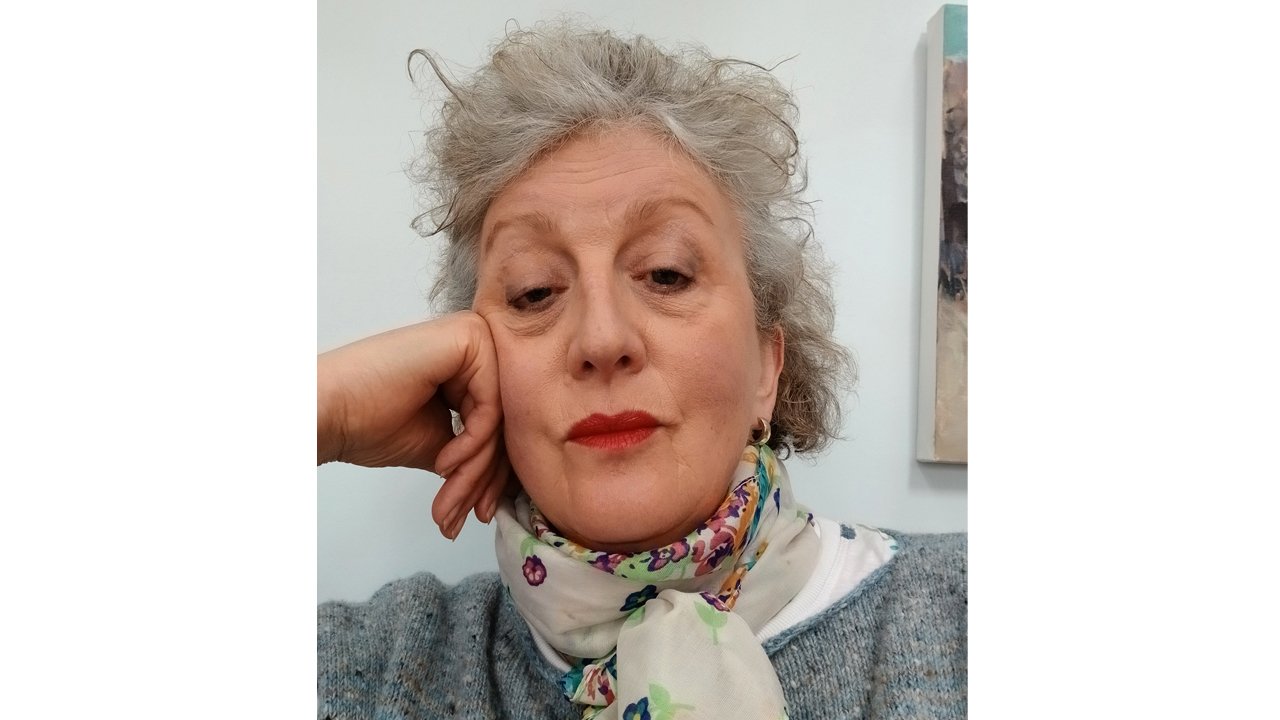
Helen Joy primarily works in mixed media using oils, oil sticks, inks, charcoal and graphite. She relocated from South Wales to The Highlands in 2023 in order to concentrate on her work.
Themes and subjects
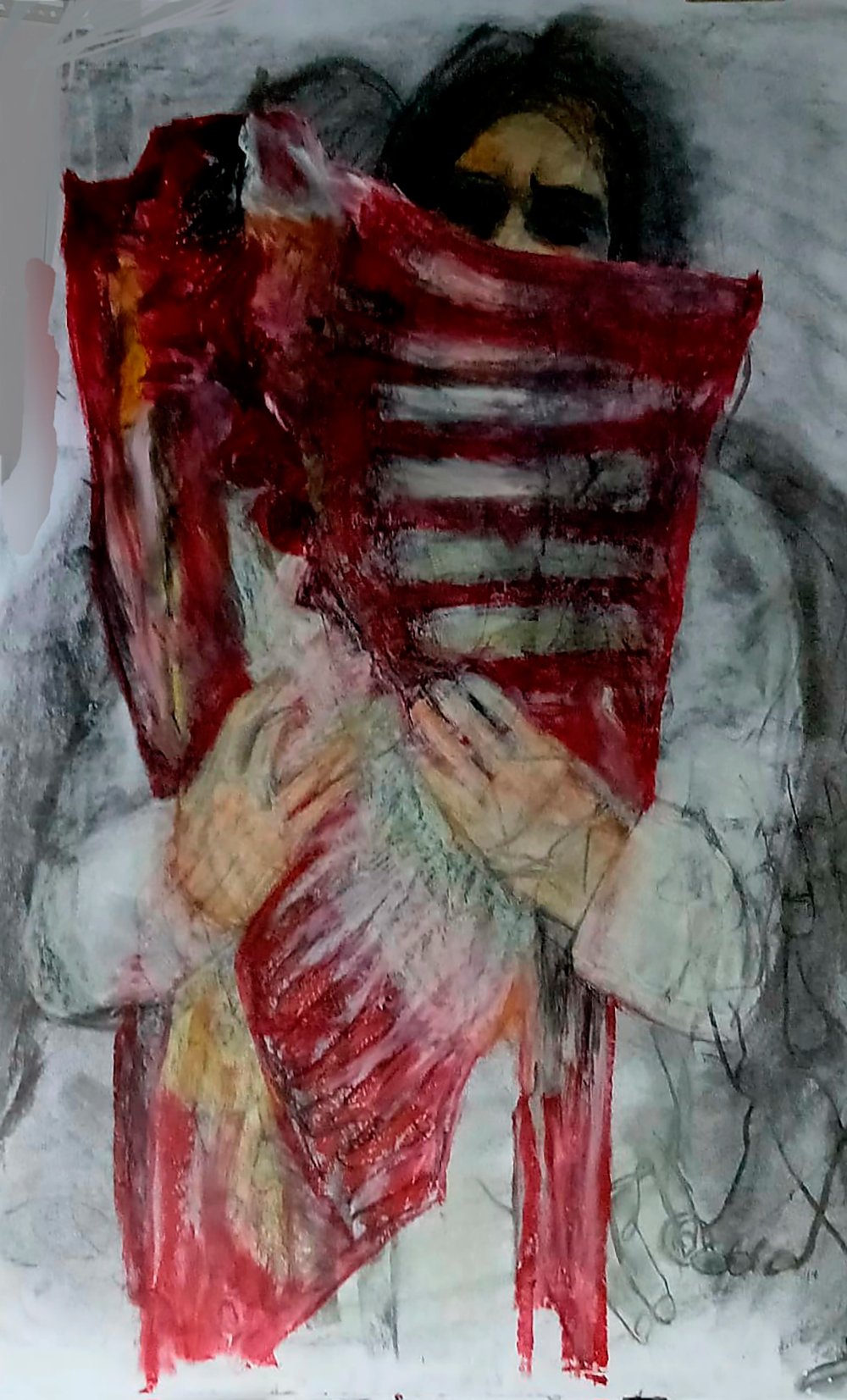
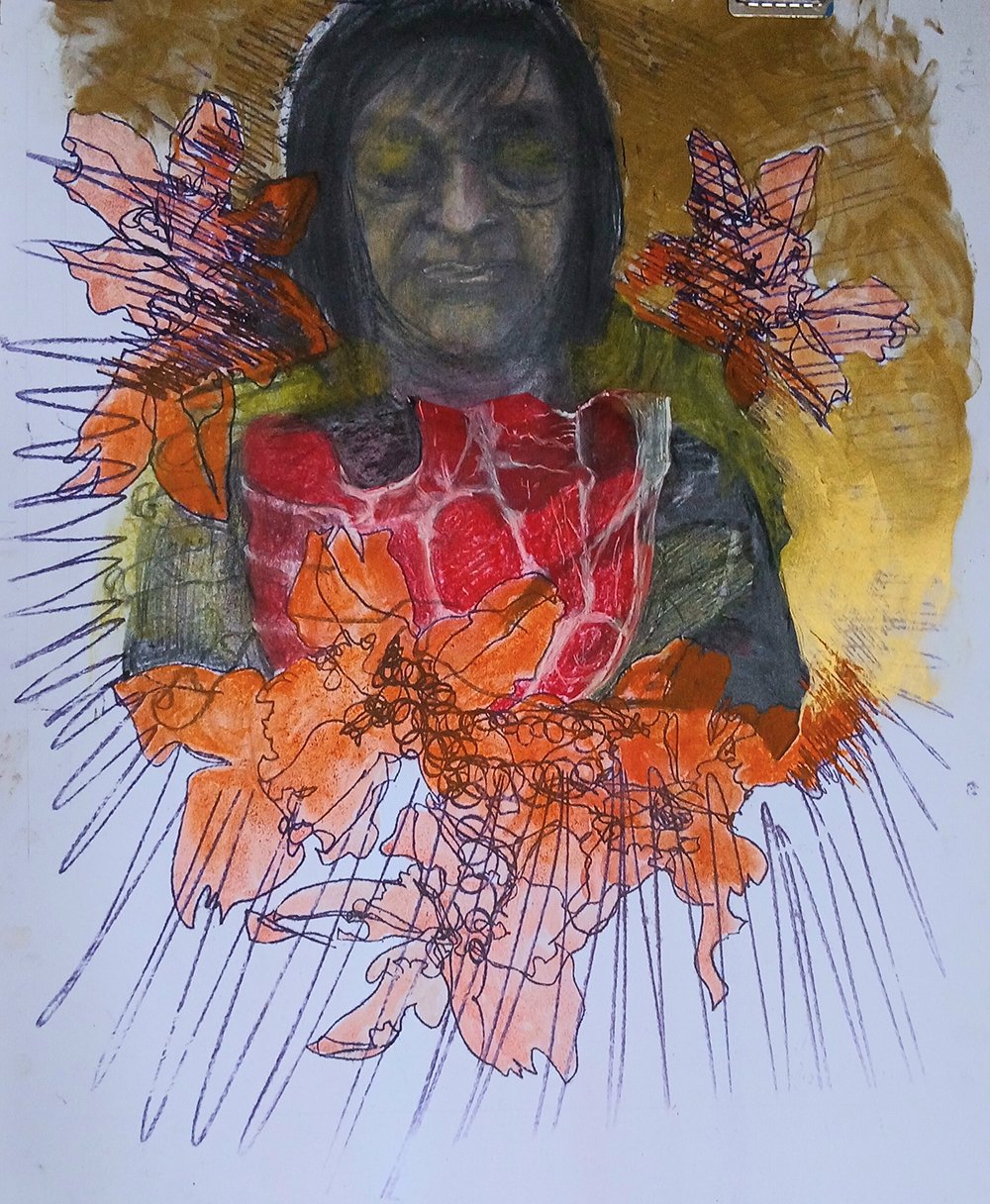
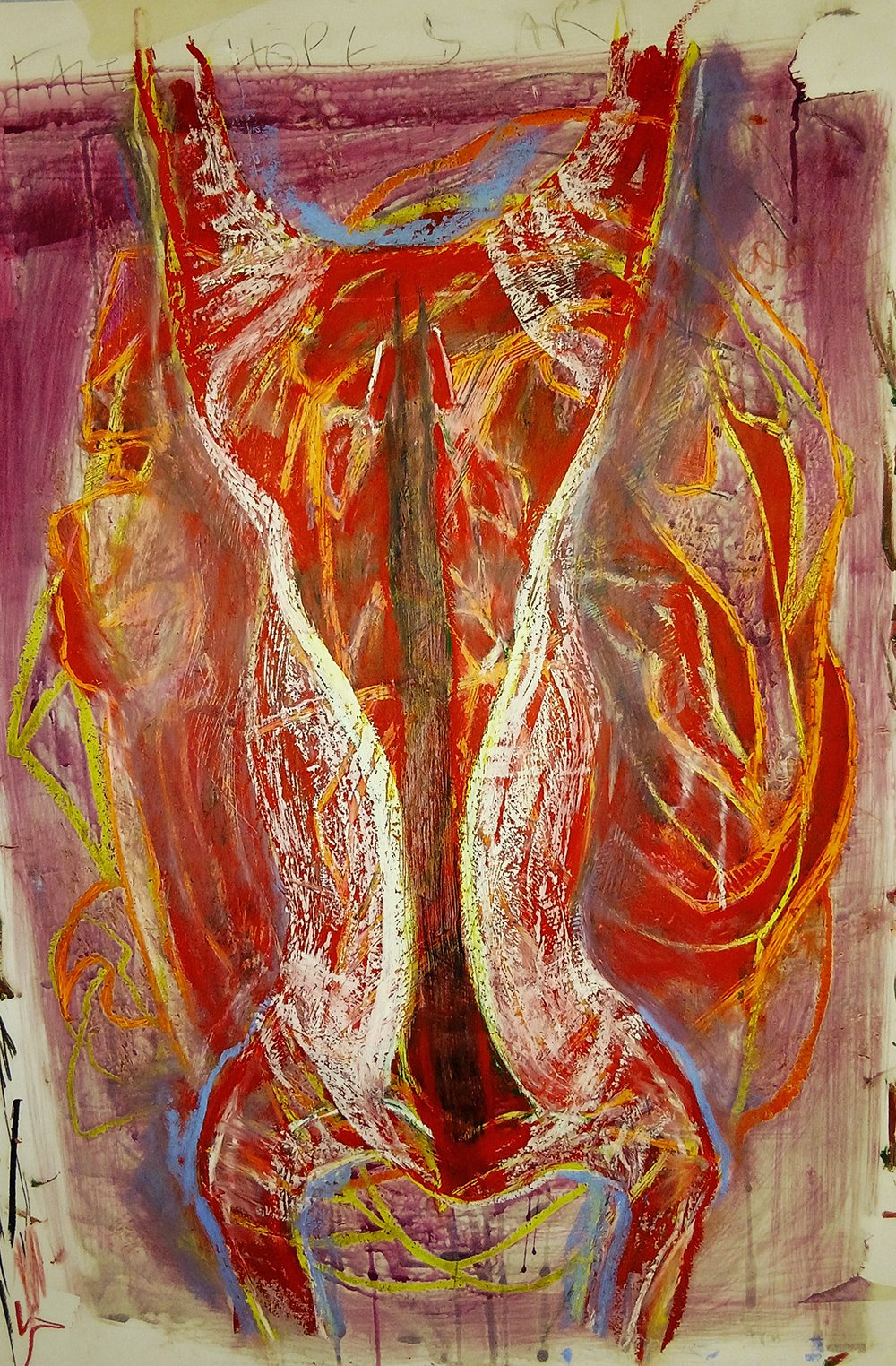
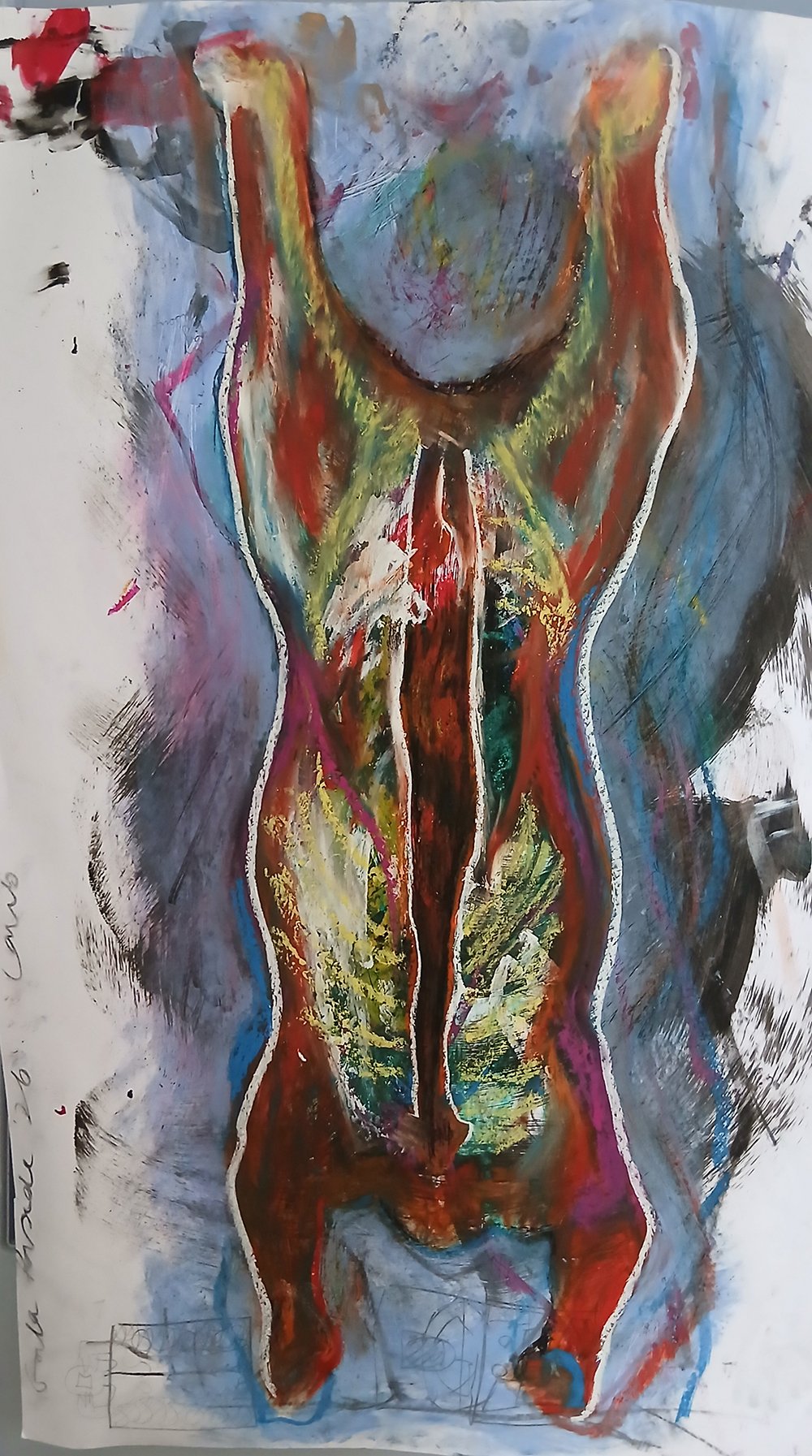
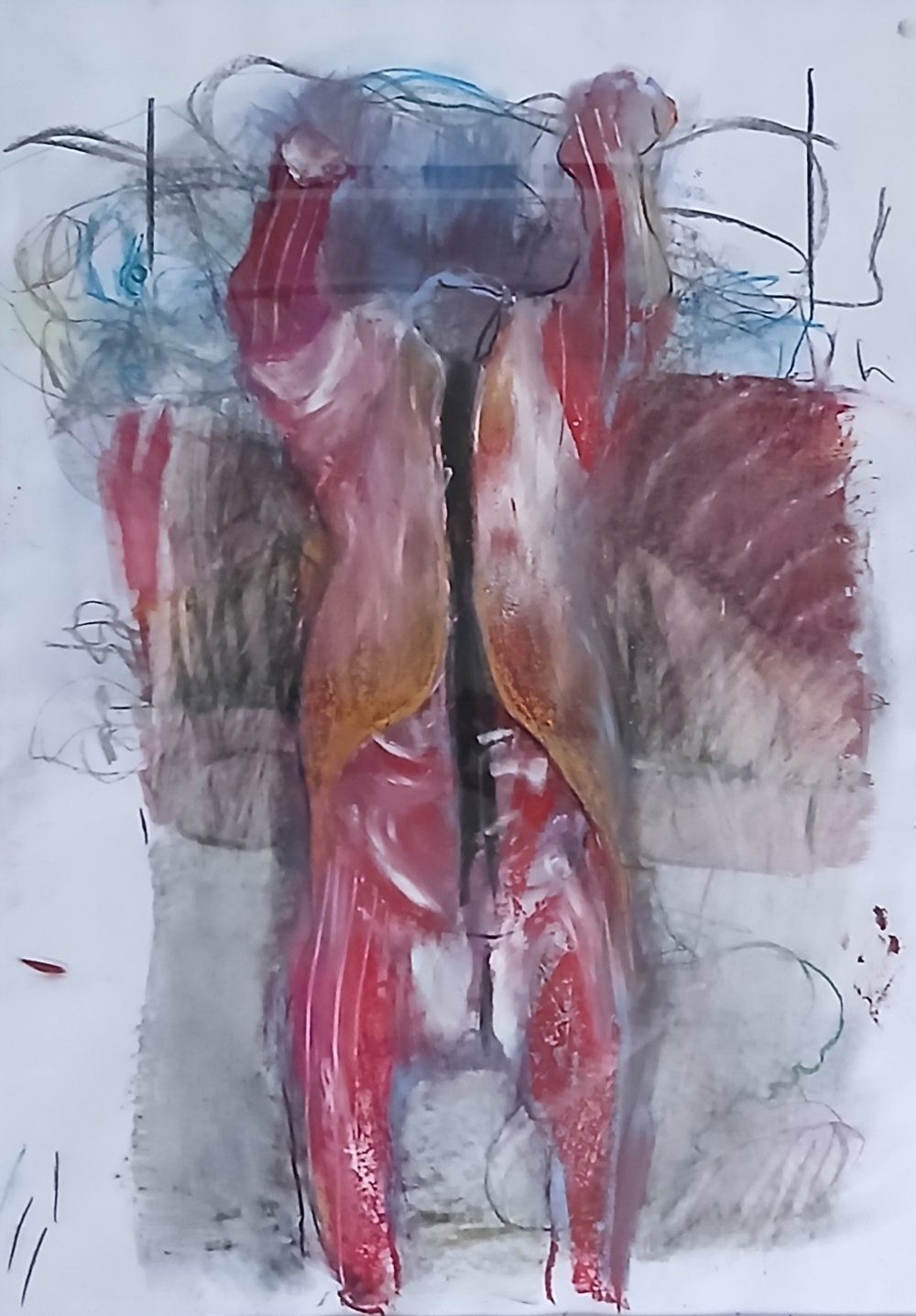
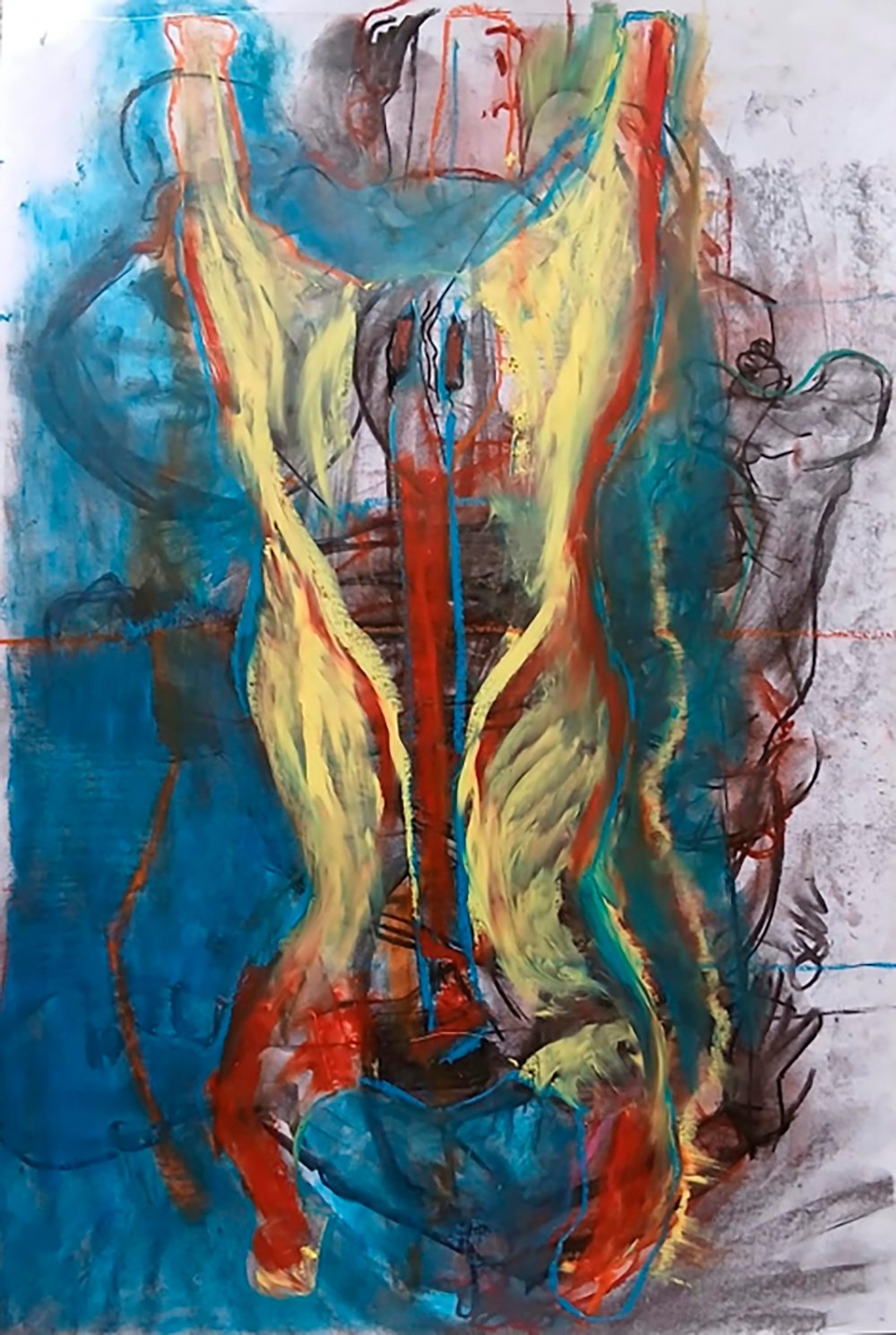
Using livestock carcasses, Joy examines how cuts of meat become representative of pain in visceral form, for grief to clutch at; and for embodying a resignation to fate.
Splayed, they reveal their reproductive leftovers, their vulnerability and their inscrutability. Through the carcass being deeply symbolic of crucifixion and rebirth; and of sustenance both physical and ideological – Joy considers grief, loss and recovery.
Awards, Exhibitions and Projects
Companion of St George July 2026
Solo exhibition Penarth 2021
East Sutherland Art Society annual exhibition 2024, 25 and 26; Arts Society Inverness annual exhibition 2024, 25 and 26; Brora Art Group exhibitions 2023 to 2026
Highland Art Prize finalist 2025, 2026
Jacksons Art Prize longlist selection for 3 entries 2026
Public artwork Golspie 2026
Est. Picturing Sutherland May 2026
Inverness Fringe Festival 2026 art installation collaboration
Education and training
MA 1988, Foundation ADT 1995 Distinction, MFA 2013 Merit
Current project and direction
Joy is currently running Picturing Sutherland, recording in pictures local countryside before it changes with the advent of energy plant; and is working towards a solo exhibition on loss and hope.
Project Statement
From drawing animal caricatures to giving classes on Vermeer, it is always the understanding of the little things which make up the bigger things that, for me, makes work truthful.
Currently working through a series of works based on carcasses from the local butchers, without close examination of their visceral qualities nothing I make could come close to being convincing. I do justice, I hope, to the livestock by affording them the courtesy of faithful reproduction before any creative interpretation can take place.
Drawing carcasses and cadavers has been the artist’s way of understanding how living things are constructed for centuries. From Leonardo, Rembrandt and Francis Bacon to Damian Hurst and a past tutor of mine, Jac Saorsa – there is a fine tradition of the artist detailing the body. I was introduced to Bellany, Soutine and Cremonini by others kind enough to show interest in my work when I exhibited 4 of the series at the East Sutherland Art Society annual exhibition this summer. I absolutely do not compare myself with these extraordinary people but they give me a feeling of legitimacy.
For me, carcasses quickly began to resemble headless Edwardian ladies in corsets and bustles, Galliano frocks maybe. They started to become things of emotional substance, about death and birth and pain in a strange, ethereal, colourful beauty. About the meat market.
Then I started thinking about grief and loss and heartbreak. About a Commando unit rescuing their skinned colleagues from a kidnap situation some years ago. About the hideous things that we do to each other. I thought about taking my own livestock to slaughter.
Cuts of meat became pain in visceral form, for grief to clutch at; and for embodying a resignation to fate.
The carcasses splayed revealed their reproductive leftovers, their vulnerability and their inscrutability. The carcass is deeply symbolic of crucifixion and rebirth, of fear and charity, love – and of sustenance both physical and ideological.
I think all the time about how we deal with grief and loss and how we recover, how we let the light return through faith and hope.