
Curatorial Review
by Oleksandr Dyvnich
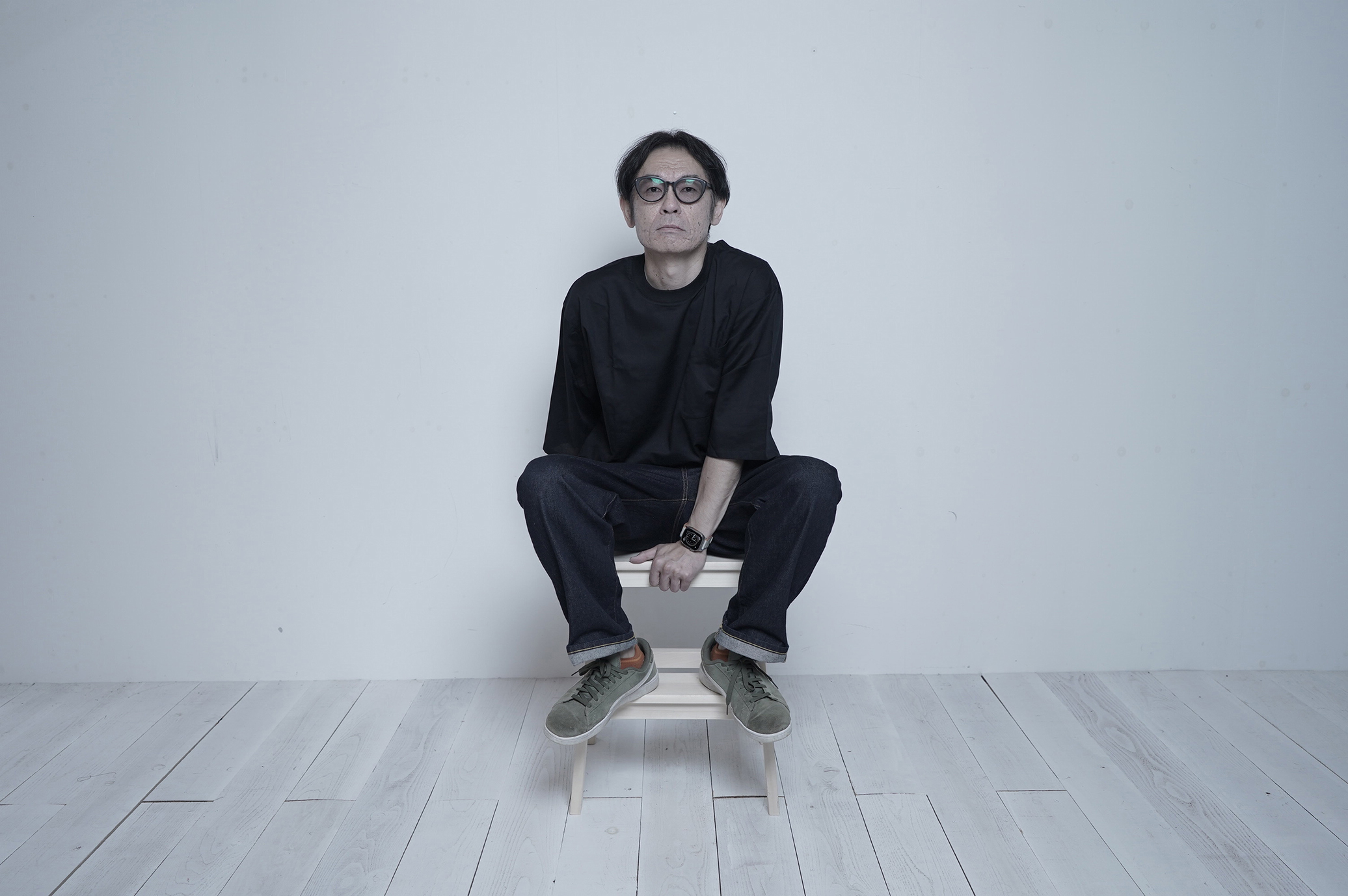
Kenji Kiyama’s body of work represents a sophisticated dialogue between the polished precision of the design industry and the visceral, often chaotic impulses of contemporary fine art. With a career spanning over two decades as an art director and designer, Kiyama utilizes his technical mastery to create “gateways”—visual entry points marked by impact, humor, or discomfort—that lead the viewer toward deeper, repressed emotional states. His transition from commercial CD cover design to sculptural objects and conceptual painting has resulted in a unique visual language that is both playfully pop and sharply critical.

Kenji Kiyama | Bento Box | 2025
In works like BONSAI INSIDE USA and BENTO BOX, Kiyama elevates “junk parts” and everyday objects into high-art icons. These sculptures embody a “Life Noise”—a term that perfectly captures the frantic, textured energy of contemporary existence.

Kenji Kiyama | Bonsai Inside USA | 2024
Bonsai Inside USA (2024) — a shipping crate on industrial casters with a tangle of found hardware erupting from its top — is Kiyama’s most overtly autobiographical piece. The bonsai, a Japanese art form demanding patience and radical reduction, is here represented by its opposite: chaotic accumulation. The word BONSAI stenciled on clean plywood becomes a punch line, a lament, and a declaration simultaneously. It is the work that most convincingly demonstrates what this artist can do when cultural biography and formal invention are allowed to collide.

Kenji Kiyama | Life Noise | 2026
Life Noise (2026) is more intimate in scale, a wheeled platform carrying a gramophone horn, rubber bumpers, blue knobs labeled LIFE and LOVE, and a small open book bearing the text ‘the sound of life sounds like love / the sound of love sounds like noise.’ The sentiment is genuine but exposed — the literary device too neat, the poetry straining under its own weight. It is the one piece where Kiyama’s instinct to explain overcomes his instinct to show.

Kenji Kiyama | 500 Light Years From You | 2024
500 Light Years From You (2024) is the most formally elegant work: a vintage medium-format camera on a tripod emits a glowing, serpentine acrylic tube that dissolves into black void. The piece captures light as a physical, impermanent thing — simultaneously a beam of vision and a tangled nervous system. Against a pure black ground it achieves a stillness rare in Kiyama’s otherwise busy vocabulary. It is a reminder that his design background gives him genuine control of negative space when he trusts it.

Kenji Kiyama | Love Is Calling | 2023
The comic-eye painting Love Is Calling (2023) is the most legible work and, consequently, the least interesting. A monumental black form on white — part open mouth, part cartoon pupil — cites Lichtenstein and street art without fully committing to either lineage. The vintage telephone on a pedestal beside it literalizes the title in a way the painting’s scale does not require. The series has commercial appeal; whether it deepens over time remains to be seen.

Kenji Kiyama | My Foot | 2026
My Foot (2026) applies a similar logic to a cobbler’s last — the anonymous wooden foot form used to shape shoes — grafting onto it a clock mechanism, a vacuum tube, a caster wheel, a neon safety strap, and a slender fishing rod crowned with a brass funnel. The result is quietly absurdist: a foot going nowhere, bristling with measurement and potential energy, elevated on a Saarinen tulip stand as if on a pedestal of mid-century optimism. The Foot is Kiyama at his most formally disciplined; every element earns its place.
Conclusion
Kenji Kiyama is a “perpetual student” of the human condition whose work successfully bridges the gap between high-end design and conceptual depth. Through his masterful use of impact and irony, he creates art that is as aesthetically pleasing as it is psychologically demanding. Kiyama does not merely create objects; he constructs emotional experiences that remain with the viewer long after they have left the gallery, proving that the most profound truths are often found hidden behind a mask of playfulness.