

Curatorial Review
by Oleksandr Dyvnich
In psychiatry, attention is the primary instrument: the clinician listens for pattern, repetition and the small deviation that signals something beneath the surface. Dr Mahanta’s drawings work by a similar method. Built from concentric rings, radial petals and densely patterned bands, her images belong to the long tradition of the mandala, yet they read less as devotional diagrams than as records of sustained concentration, structures assembled mark by mark in which patience itself becomes visible.
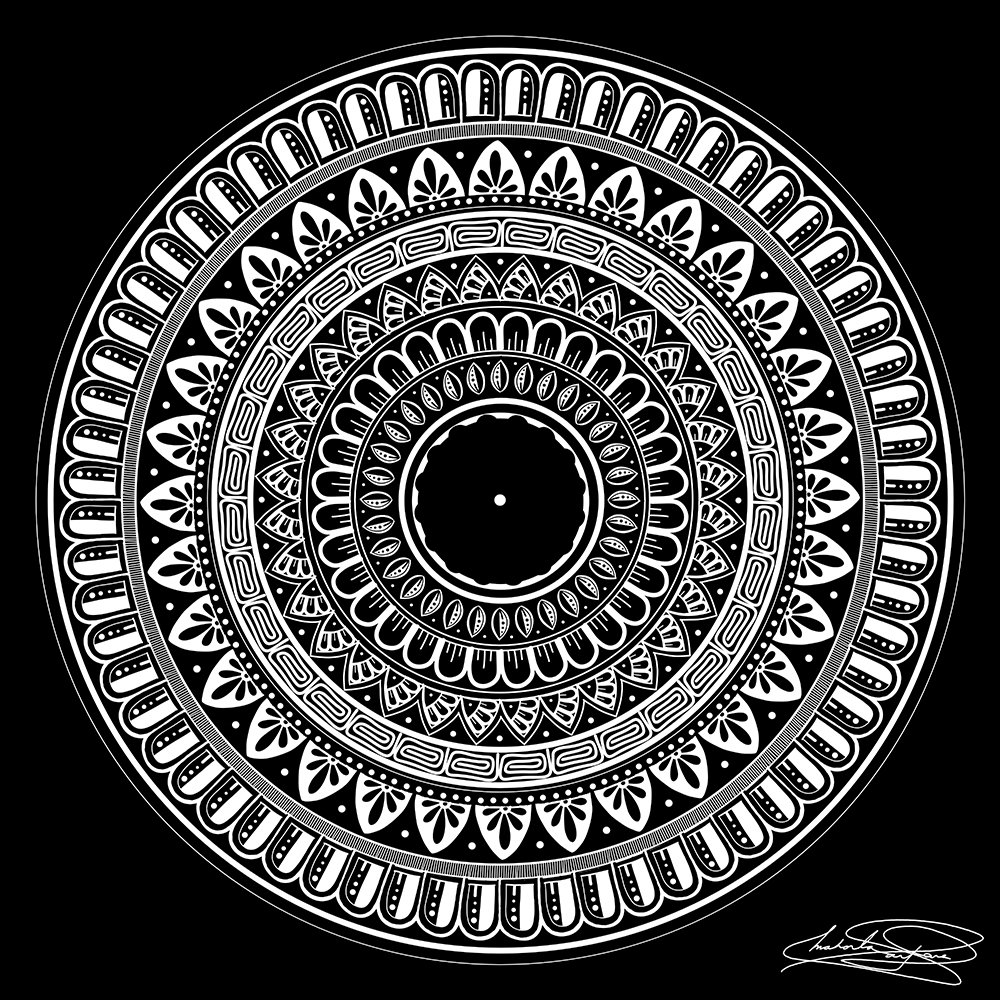
The black-and-white circular mandala is the clearest statement of this approach. Arched cells, palmette-like leaves, meandering ribbons and rows of dots alternate in bands of shifting density, so that the eye travels inward through a kind of ordered breathing. At the centre, however, the ornament gives way to a plain black disc with a single white point. The composition comes to rest not in a flourish but in silence, and its resemblance to both a vinyl record and a pupil lends it a quiet ambiguity: something to be listened to, or something that looks back.
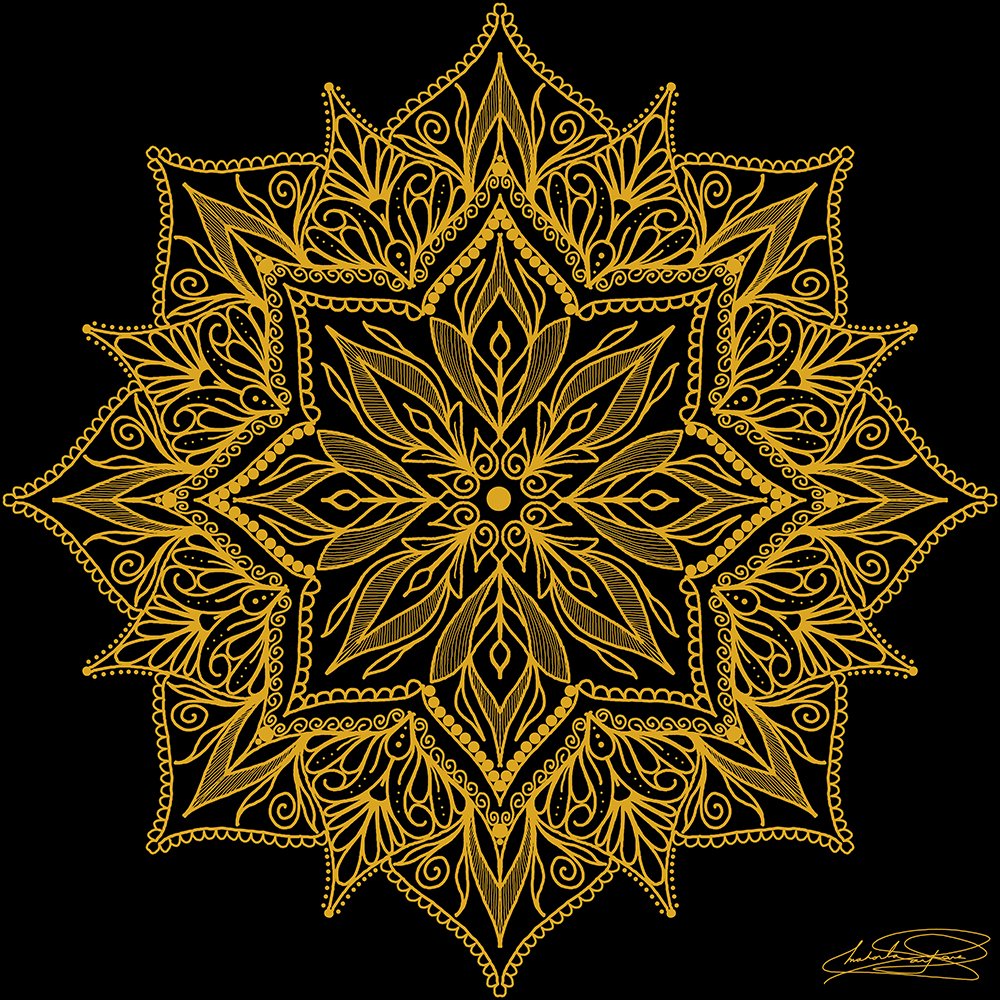
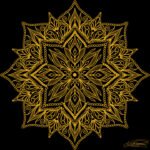
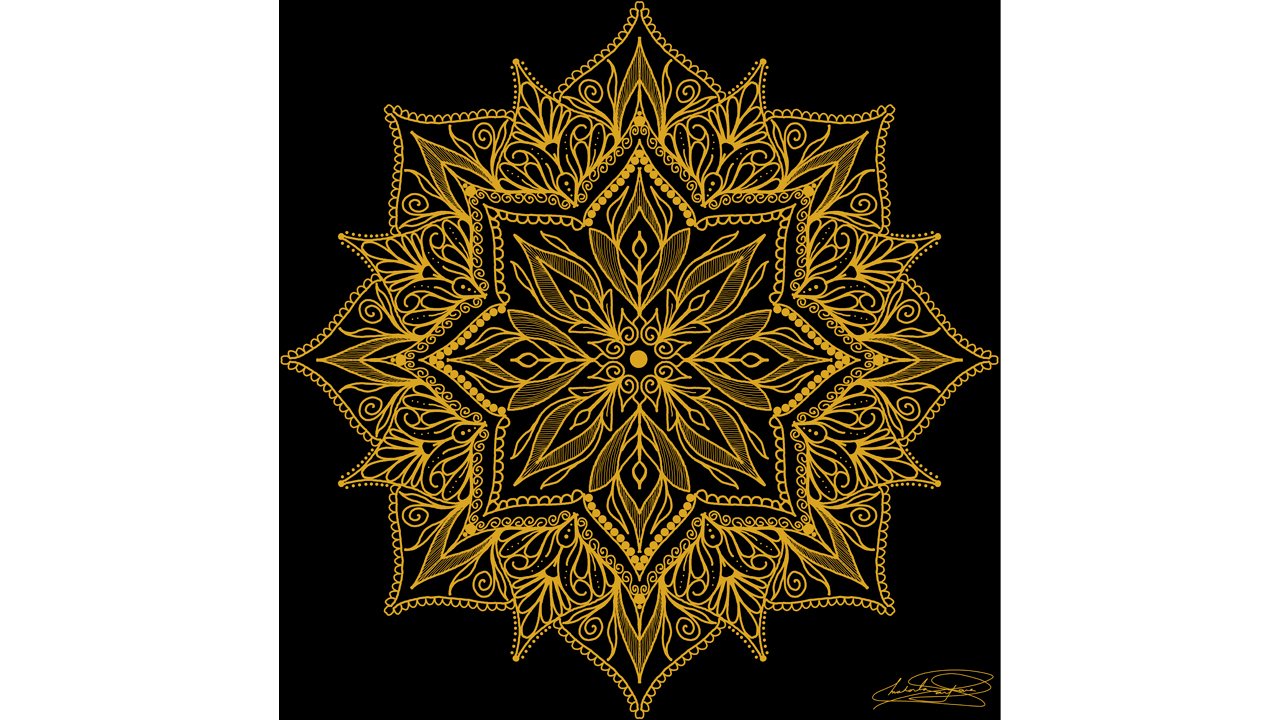
The gold-on-black mandala is close in spirit, its star-shaped form combining leaves, scrolls and beaded contours with fluid, confident linework. Its outer petals, however, are so uniformly dense that the eye finds no place to rest beyond the centre.
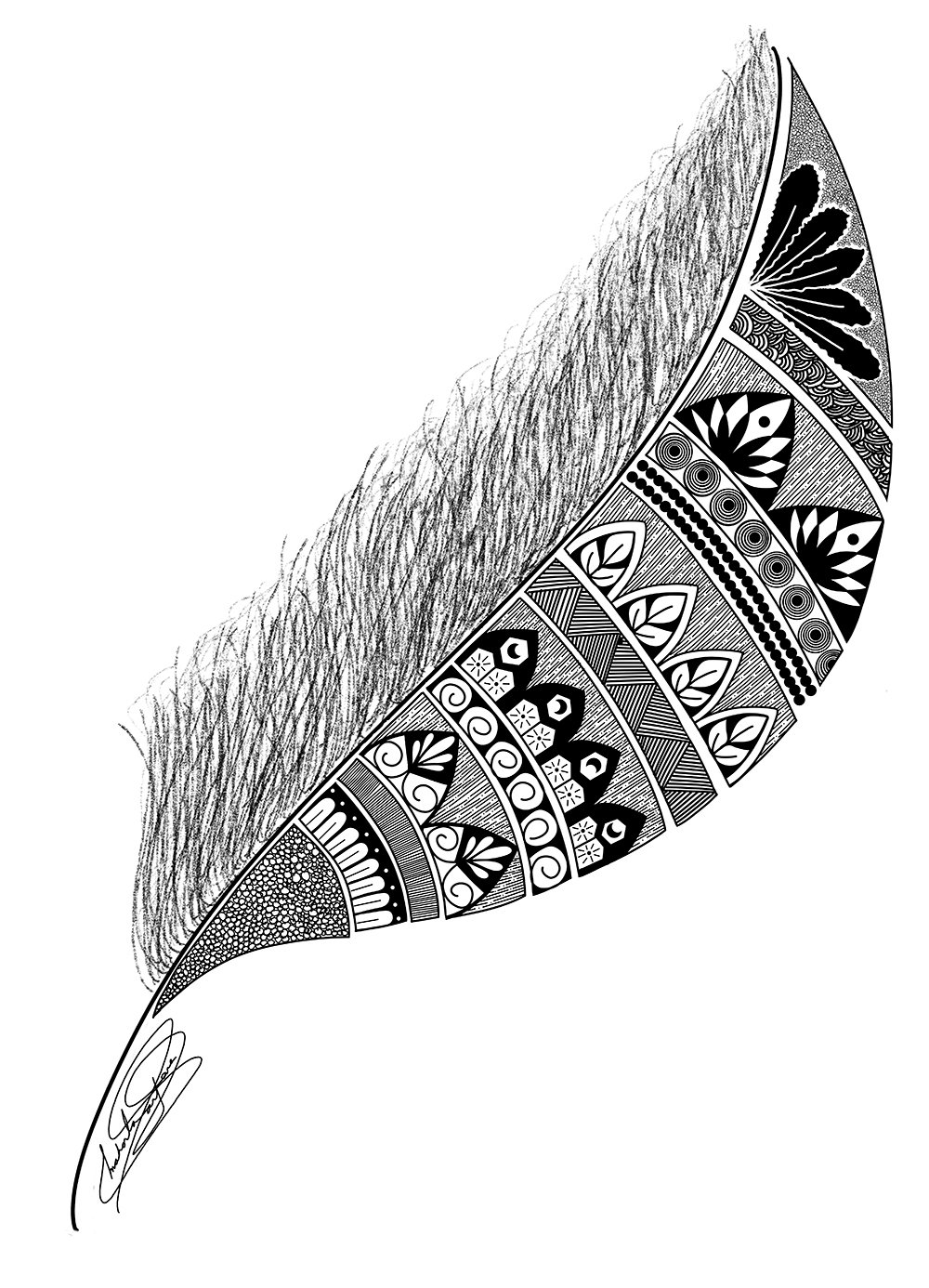
The feather is the most conceptually interesting work in the selection. Split along its shaft, it sets loose, almost restless graphite barbs against a vane divided into neat compartments of pattern. The natural and the systematised, the felt and the classified, share a single form, and it is tempting to read the piece as a meeting between lived experience and the language used to describe it.
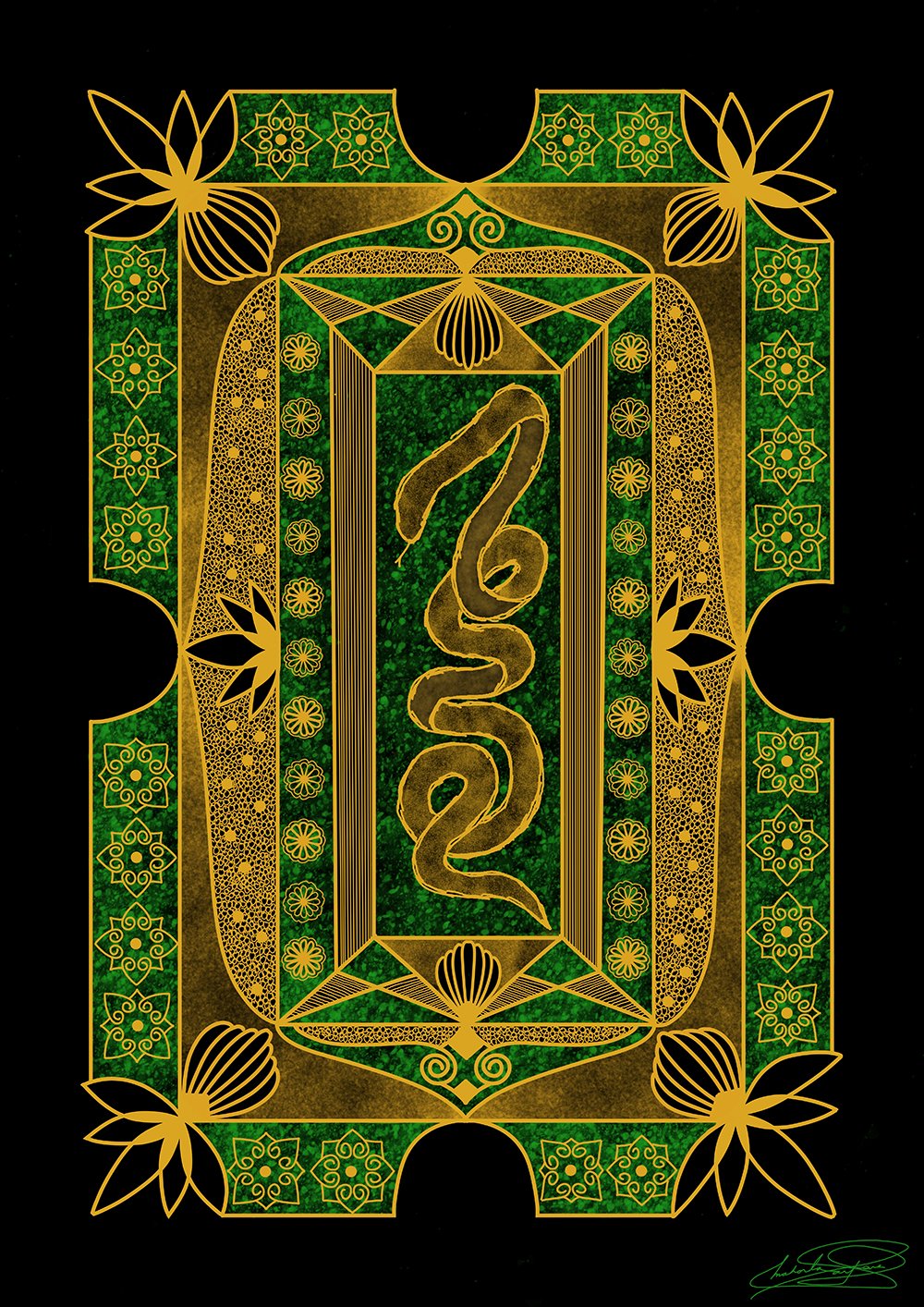
The colour works widen the register. The green-and-gold panel recalls the carpet pages of illuminated manuscripts, while its single coiled serpent evokes the Rod of Asclepius, the emblem of medicine, suggesting a private dialogue between the artist’s two vocations.
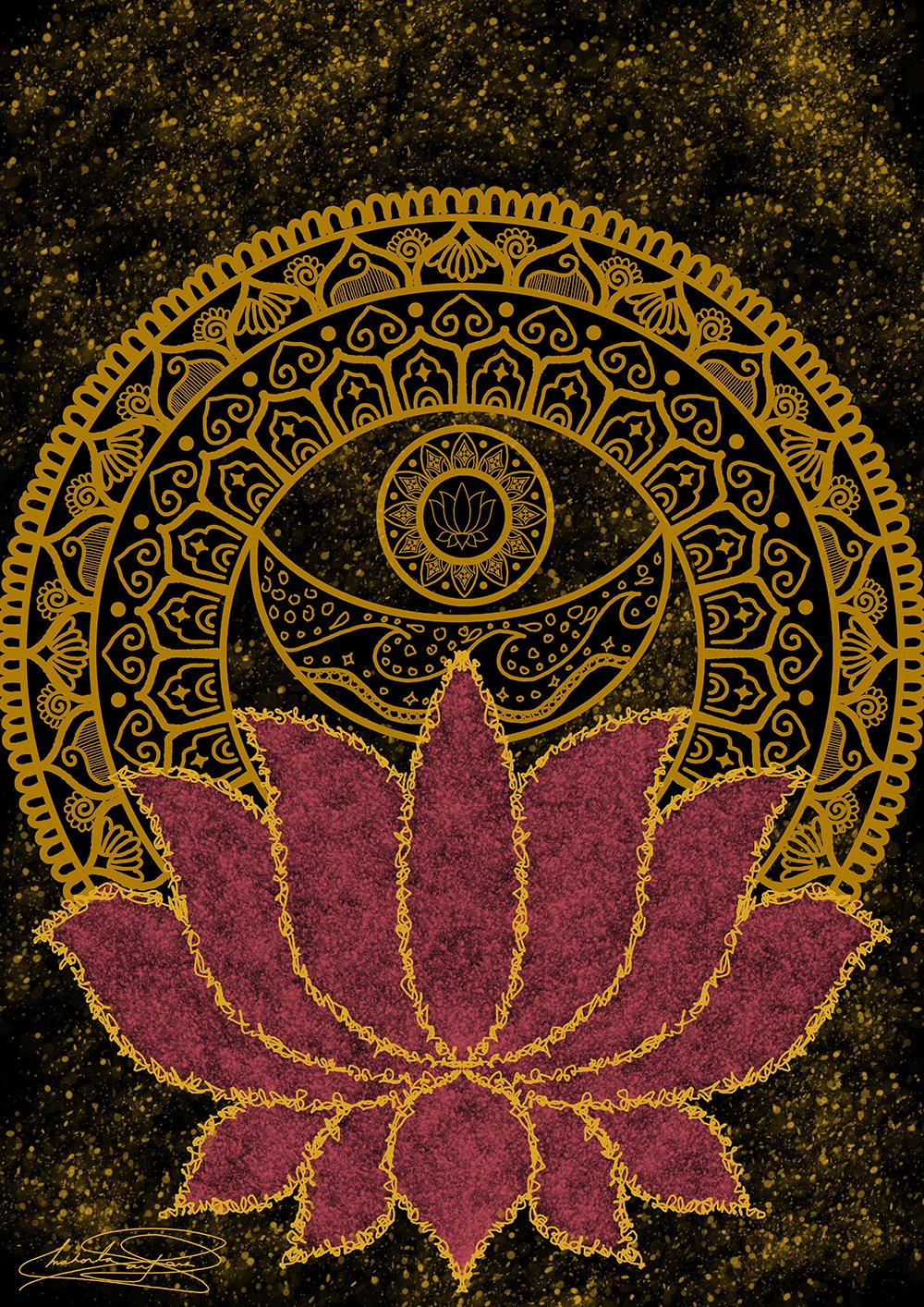
In the eye-and-lotus composition, an iris formed by a miniature mandala hovers above a textured crimson lotus, an image of inner vision in which the clinical gaze seems turned inward.
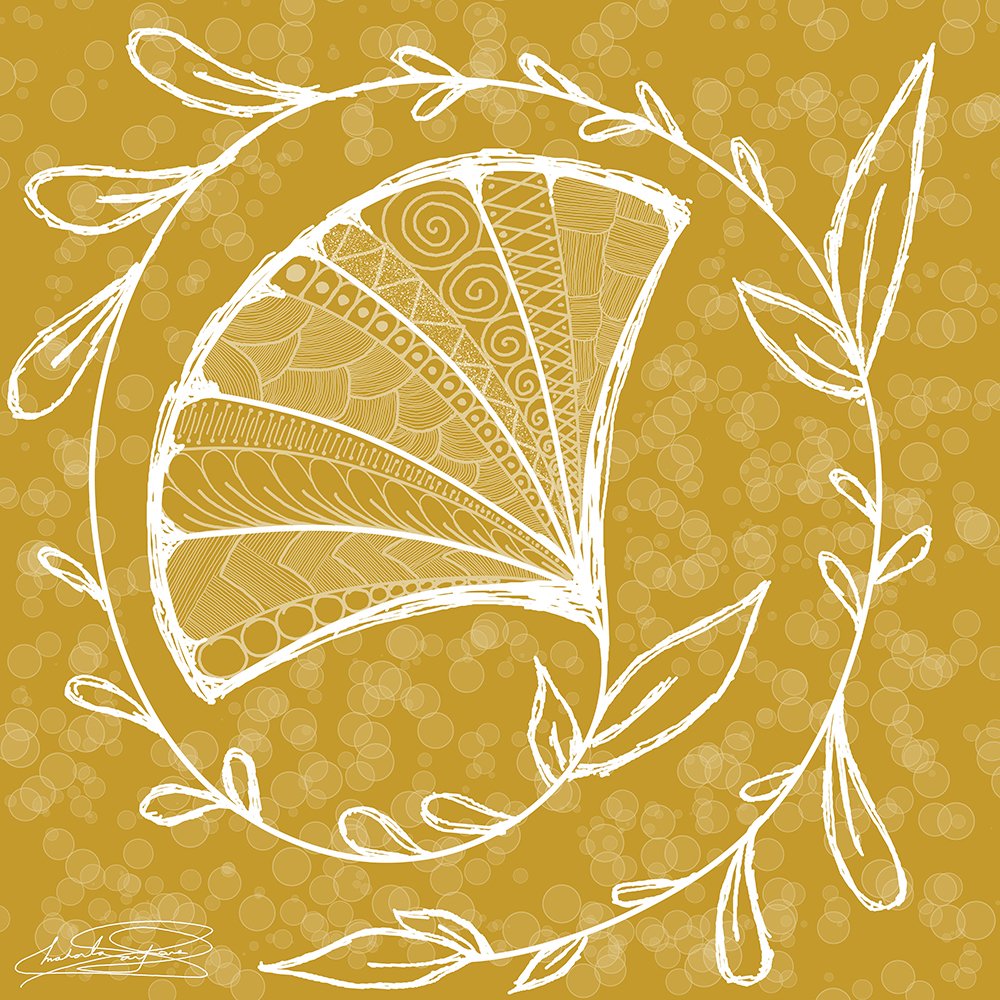
The gold-ground composition, with its patterned fan inside a hand-drawn wreath, achieves a similar balance between precision and a looser, sketch-like line, although the translucent bokeh circles behind it are a stock digital effect that clutters otherwise delicate marks.
Not every element carries equal conviction. More broadly, the stated commitment to abstraction as self-expression is, for now, more implied than enacted. The vocabulary of mandala and pattern is shared and highly codified, and the personal voice surfaces most strongly where the artist disrupts the system: the divided feather, the serpent, the watching eye. These are the moments where the work feels most alive, and pushing further into asymmetry, interruption and the pattern that breaks could allow her understanding of the mind to enter the forms themselves rather than only their symbols.
What emerges is a practice grounded in discipline, care and a genuinely sophisticated sense of rhythm. For an artist whose working life is devoted to the inner lives of others, these drawings offer something rare: a space where order is not imposed but patiently earned.