

Curatorial Review
by Oleksandr Dyvnich
Nicholas D. Todd draws as a calligrapher writes: the stroke comes first and the subject follows. His hybrid of manga and Sumi-e treats a single mark of ink as a proposition (a fringe, a nose, a shoulder) and lets the figure grow around it. The six works under review, made between 2020 and 2026, show how far that method can carry a picture and where it begins to strain.
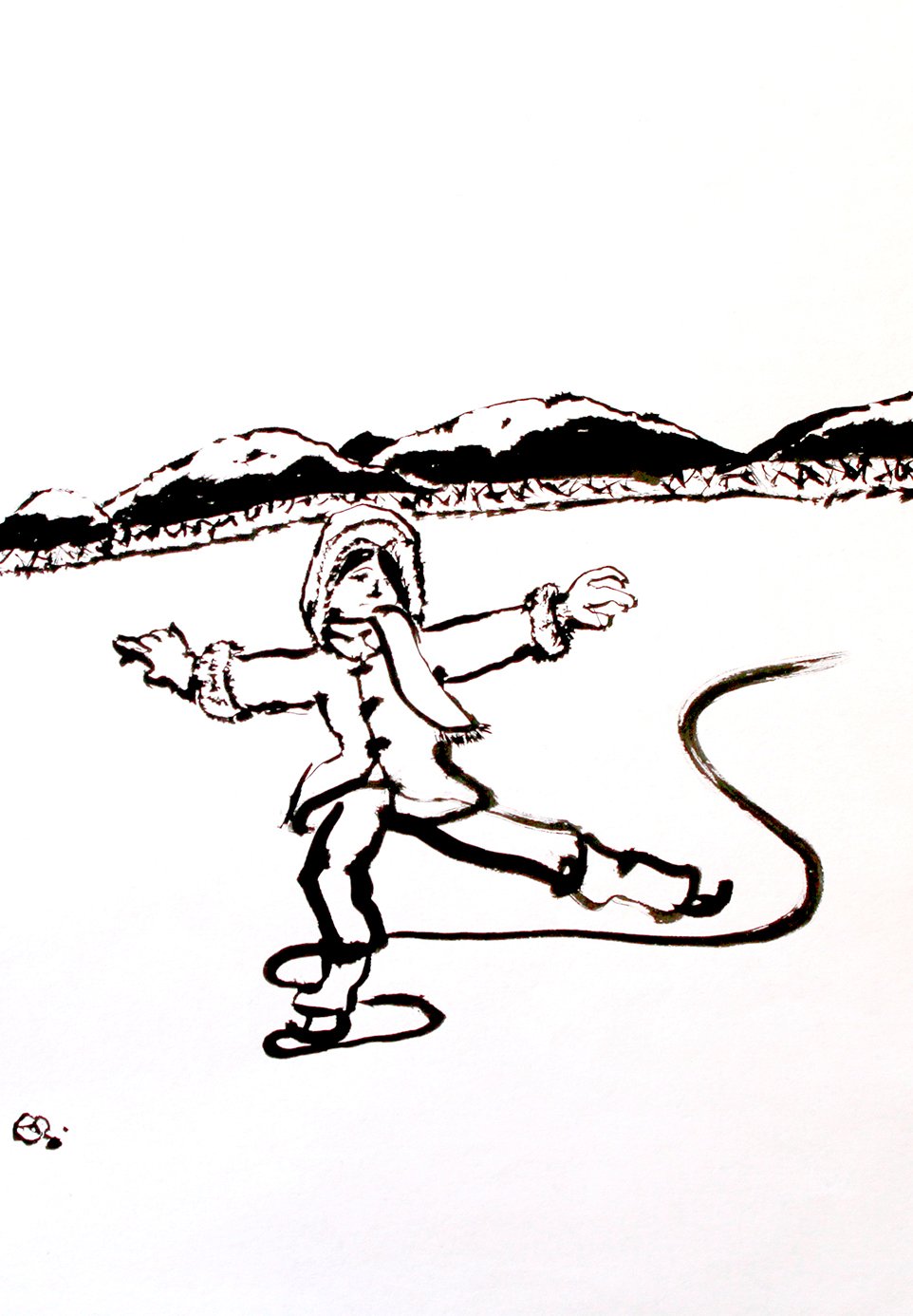
Nick Todd | Ice Skating | 2020
Ice Skating (2020) already holds the key gesture. A girl in a fur-trimmed parka throws her arms wide while her skate trail loops back in one unbroken, dry-brushed curve, and the white page becomes frozen space.
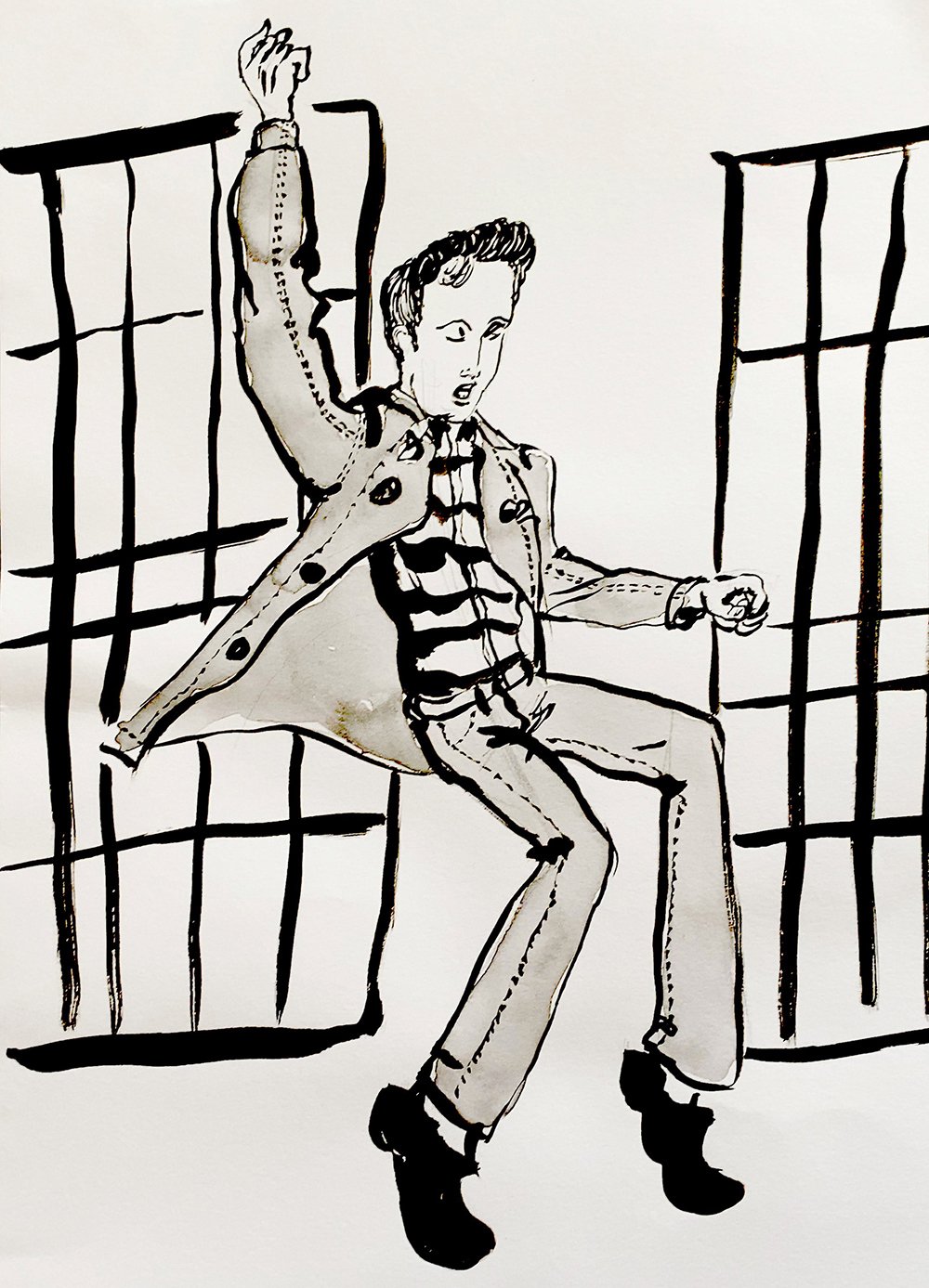
Nick Todd | Jailhouse Rock | 2021
Jailhouse Rock (2021), made for the Tokyo magazine FOREVER ELVIS, is the only work here to use grey wash: the tone gives the denim weight, the dashed stitching turns costume into rhythm, and the loose grid of cell bars echoes the striped shirt, so prison and performer share one pattern.
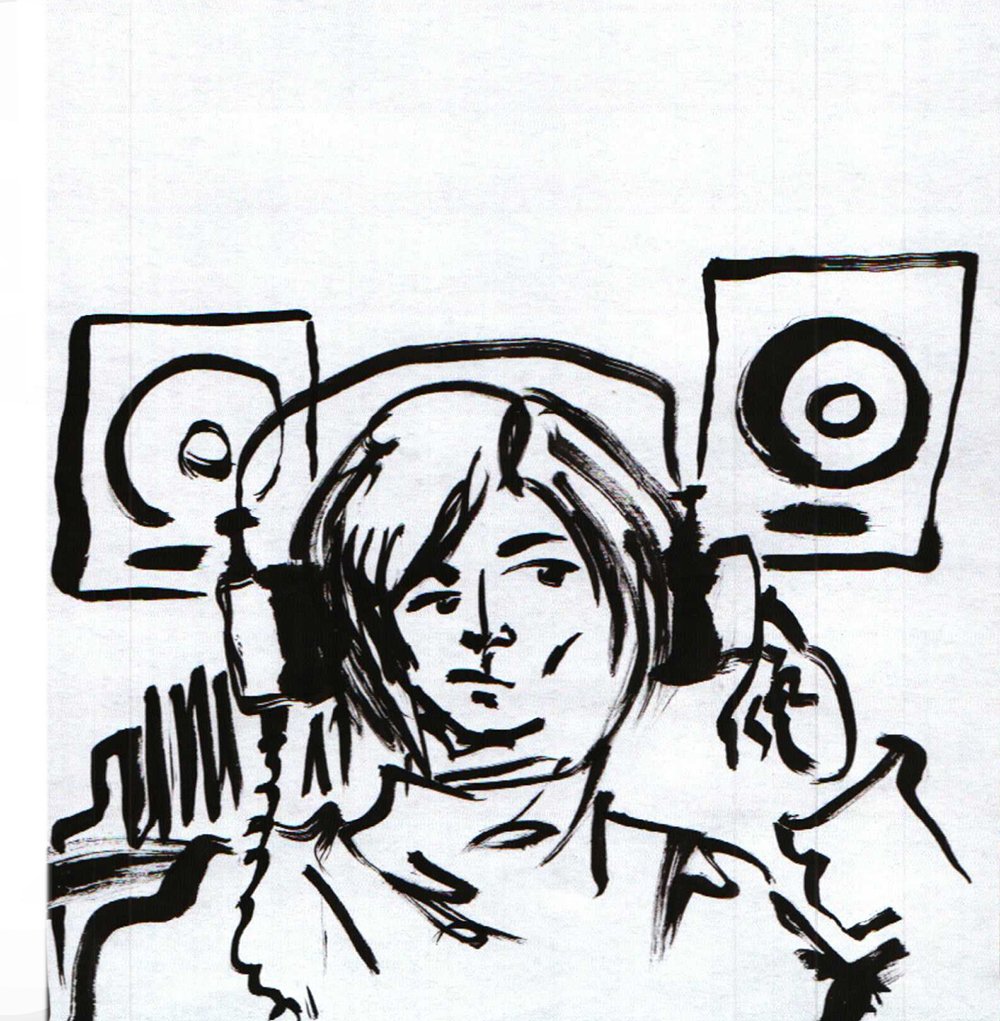
Nick Todd | Headphones | 2022
Headphones (2022) is Todd at his most graphic, with the concentric rings of two studio monitors framing a young man’s frontal stare.
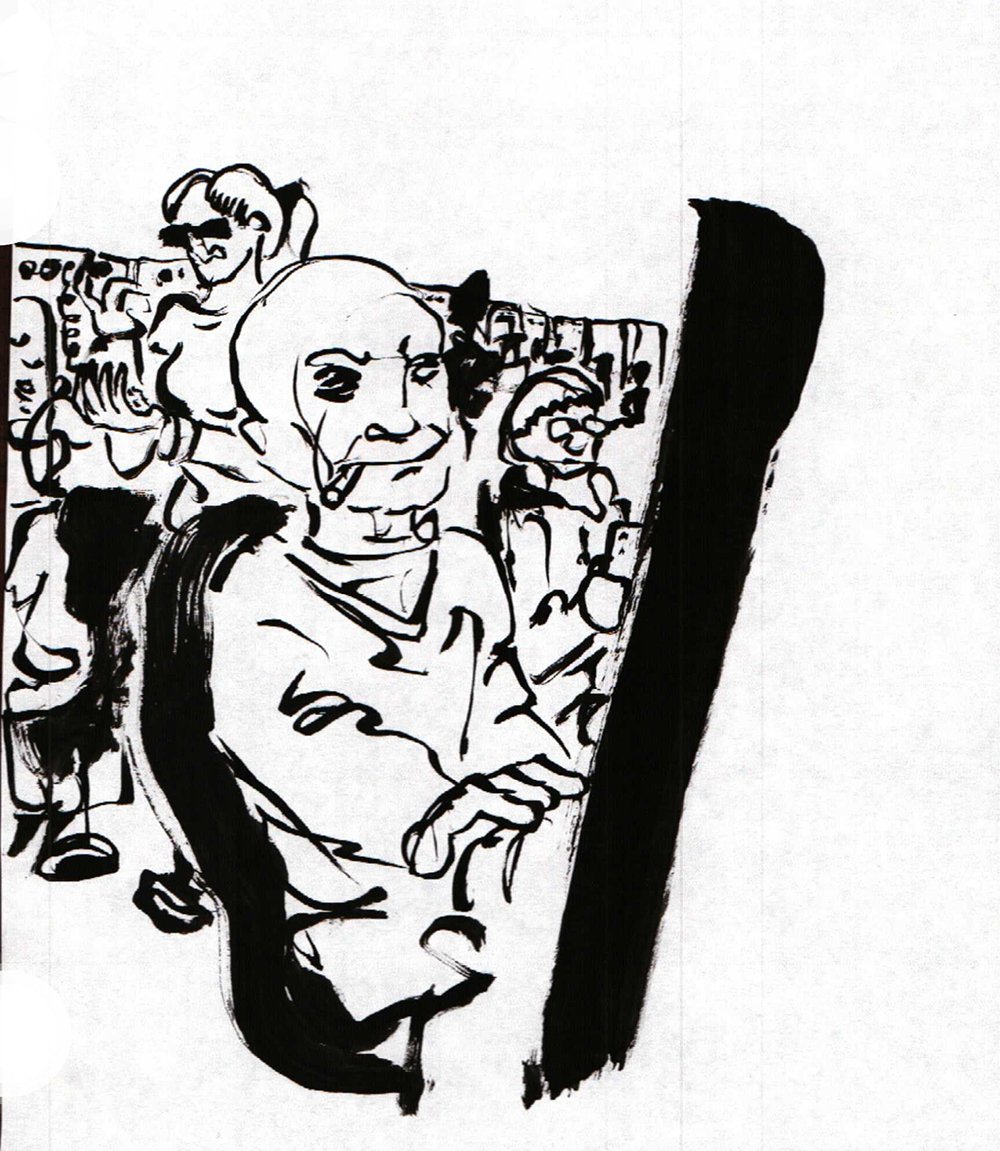
Nick Todd | Pachinco | 2023
Pachinko (2023), recalled from an arcade in Kanazawa, is the boldest composition. A vertical slab of solid black, the edge of a machine, cuts the sheet, and against it an old man with a cigarette and a crowd of absorbed players dissolve into quick, nervous strokes.
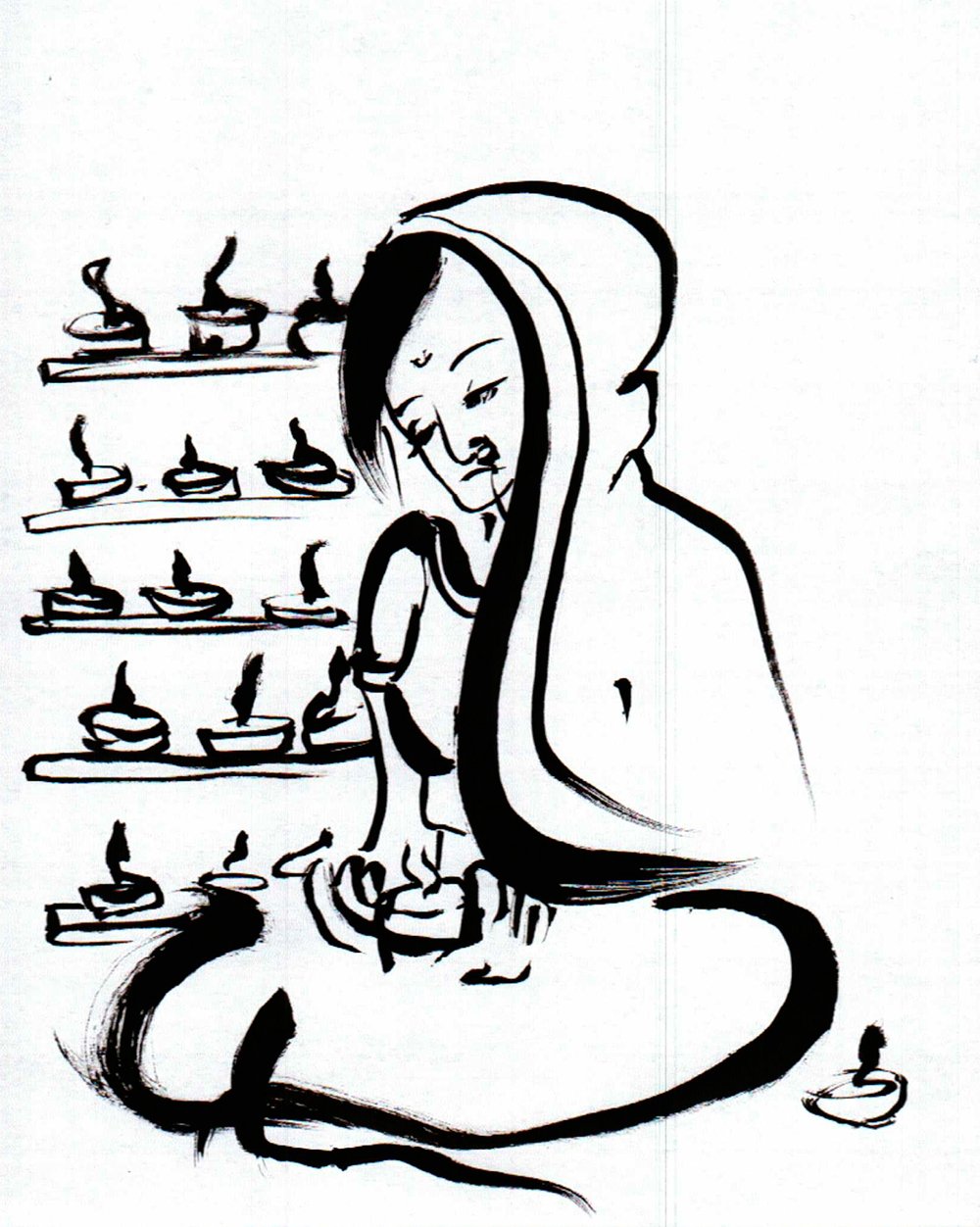
Nick Todd | Diwali | 2023
Diwali (2023) is the quietest work and perhaps the finest. A seated woman lights a lamp beneath shelves of flickering diyas; her crossed legs are a single long, tapering sweep, and one lone lamp at lower right steadies the page. Sea View (2026), the most recent, is also the most narrative: a girl with binoculars, a fortress on the rocks, a passing ship, birds pecking at crumbs. Here the line grows thinner and more descriptive.
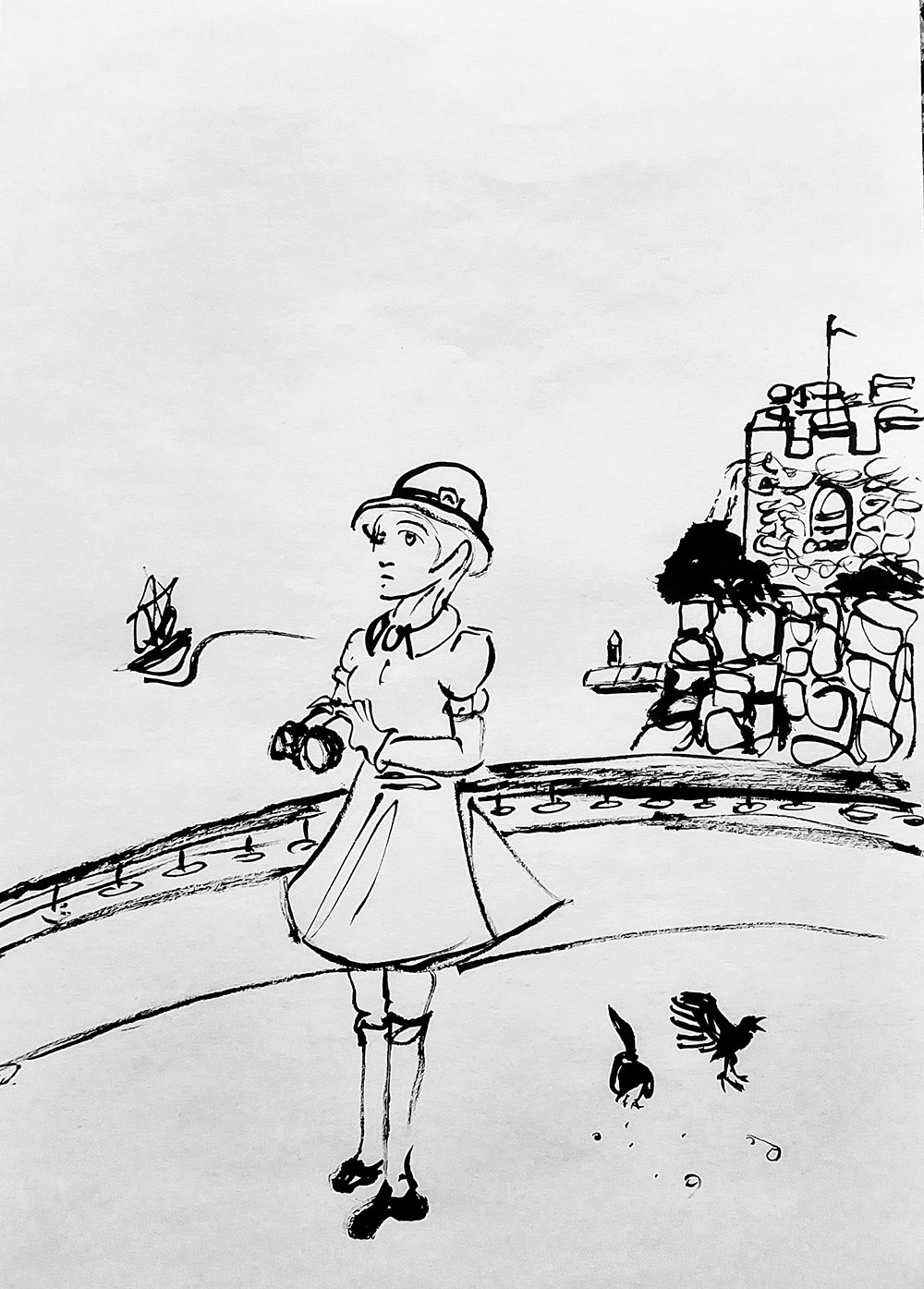
Nick Todd | Sea View | 2026
Assessment
Todd’s strength is economy under pressure. His best marks (the skate trail, the black slab, the folded legs of the Diwali figure) replace whole passages of rendering, in a lineage that runs from Hokusai’s sketchbooks to the playful Zen ink of Sengai. Weaker moments come when illustration habit overtakes ink discipline: faces sometimes default to manga shorthand, and backgrounds such as the hills of Ice Skating or the stonework of Sea View are worked more fussily than the decisive figures before them.
As his narratives grow richer, the brush risks becoming a pen. The artist’s own advice, to have faith in the strokes and let them guide, is the best brief for his next phase. When Todd keeps that faith, his work joins pop immediacy to contemplative stillness, and fully earns its place on screens from Madrid to New York.