
Curatorial Review
by Oleksandr Dyvnich
Some painters arrive at abstraction after years of figuration; others arrive directly, carried by a need to record inner states rather than the outer world. The six works presented here belong to the second path. Made in 2026, at the very start of the artist’s painting practice, they are frank about their origin: each is the trace of a distinct emotional state, reached through intuition rather than plan. What is striking is how quickly that intuition has found form.
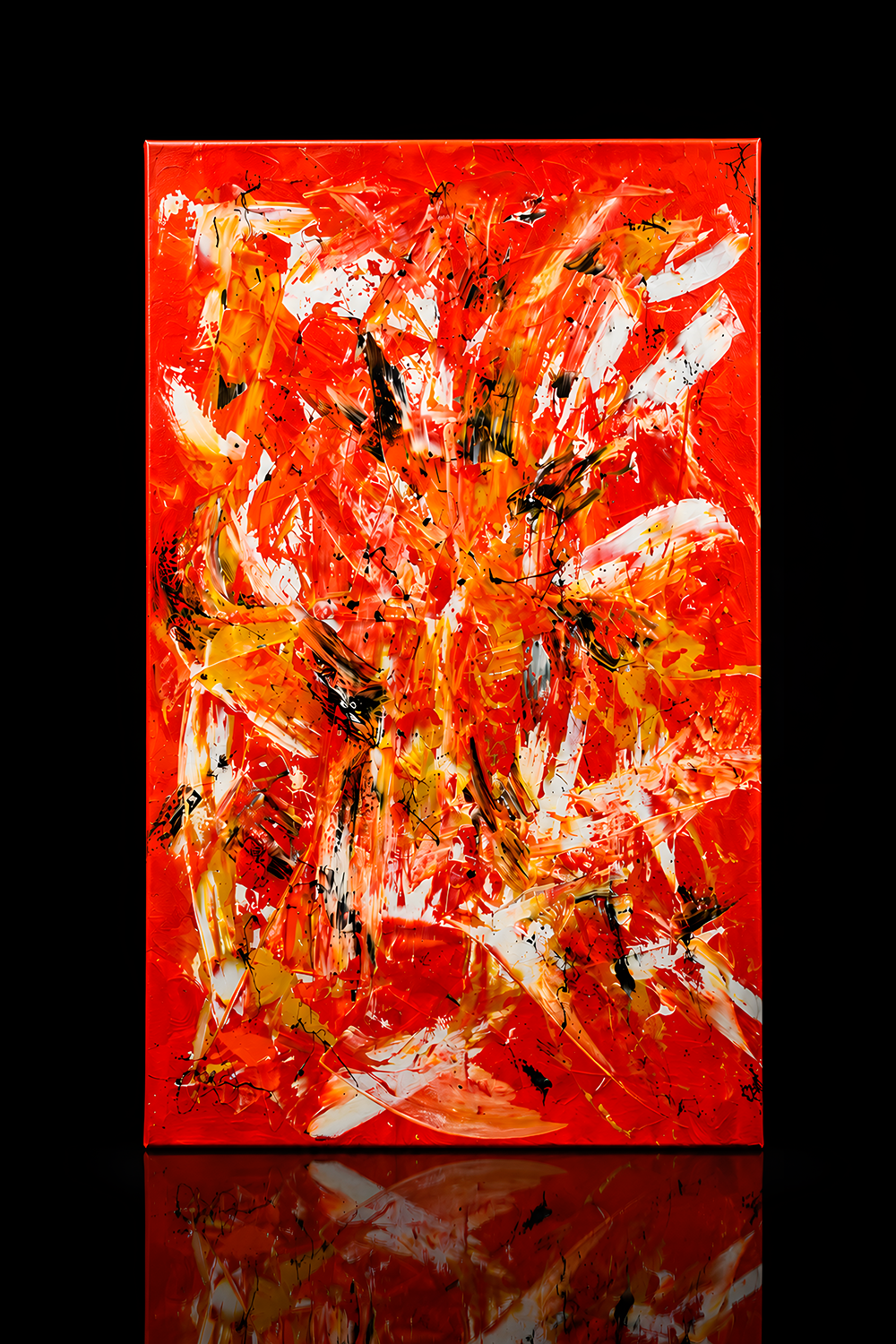
Matyas Nagy | Phoenix | 2026
The series moves between two poles. On one side are works of explosive gesture. Phoenix is the most extroverted: a field of vermilion and cadmium orange torn open by white strokes and black spatter, the marks radiating from an unstable centre like sparks rising from a fire. The painting feels less like an image of rebirth than an enactment of combustion.
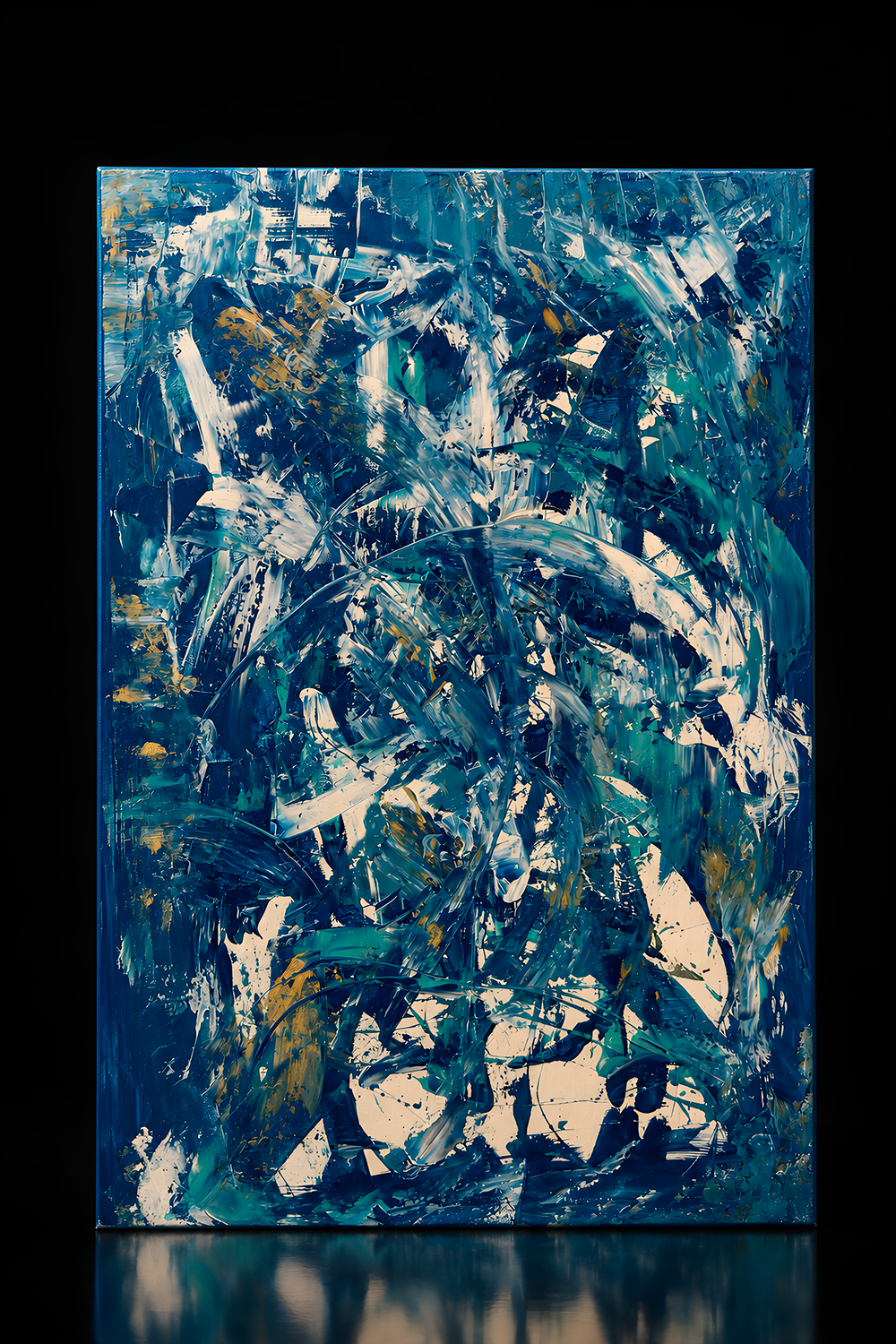
Matyas Nagy | Portal | 2026
Portal answers it in a cold key: layered ultramarine, teal and cream swept in wide arcs, with flecks of ochre catching the light like mineral seams. The density of overpainting creates real depth, a sense of looking through water or ice into a space behind the surface.
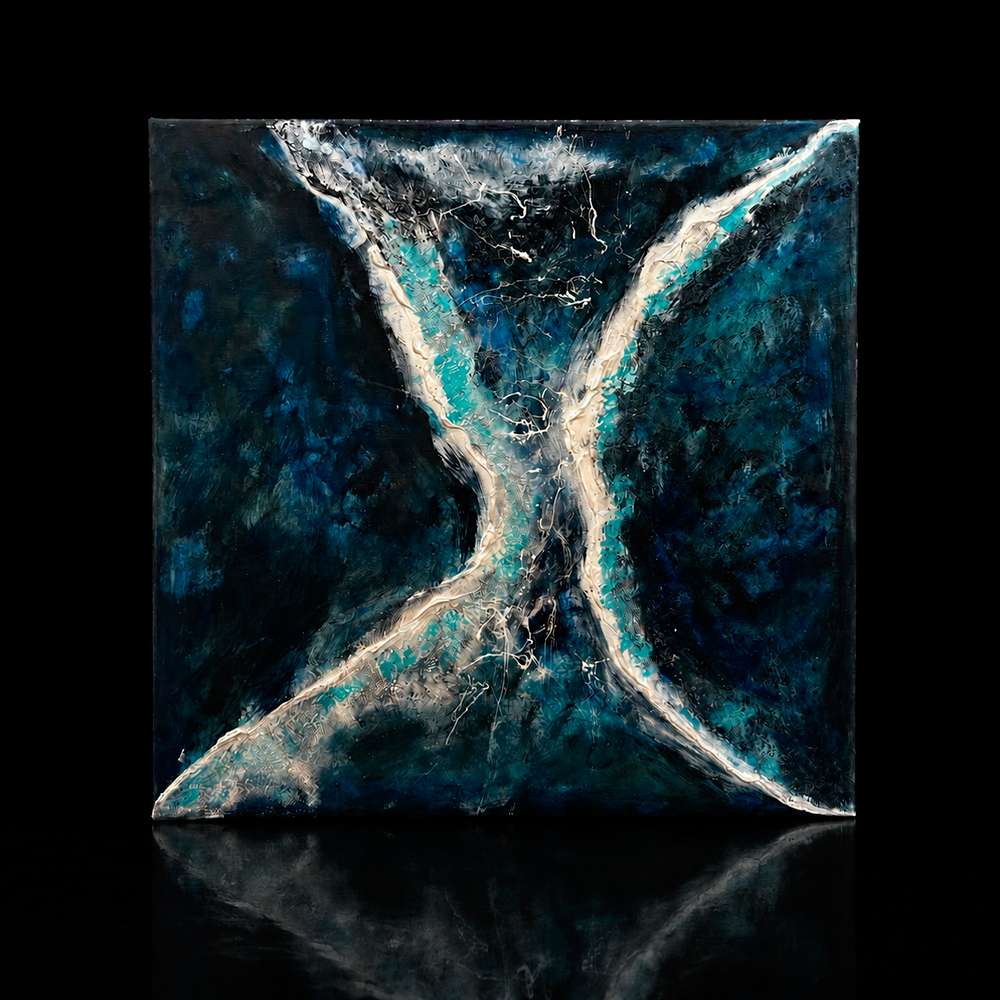
Matyas Nagy | Atmosphere| 2026
On the other side are works organised around a single, almost emblematic form. Atmosphere is built on a luminous crossing shape, its raised white edges framing a turquoise interior against deep midnight blue; the relief-like impasto and fine white threads evoke a nebula or a river delta seen from above.
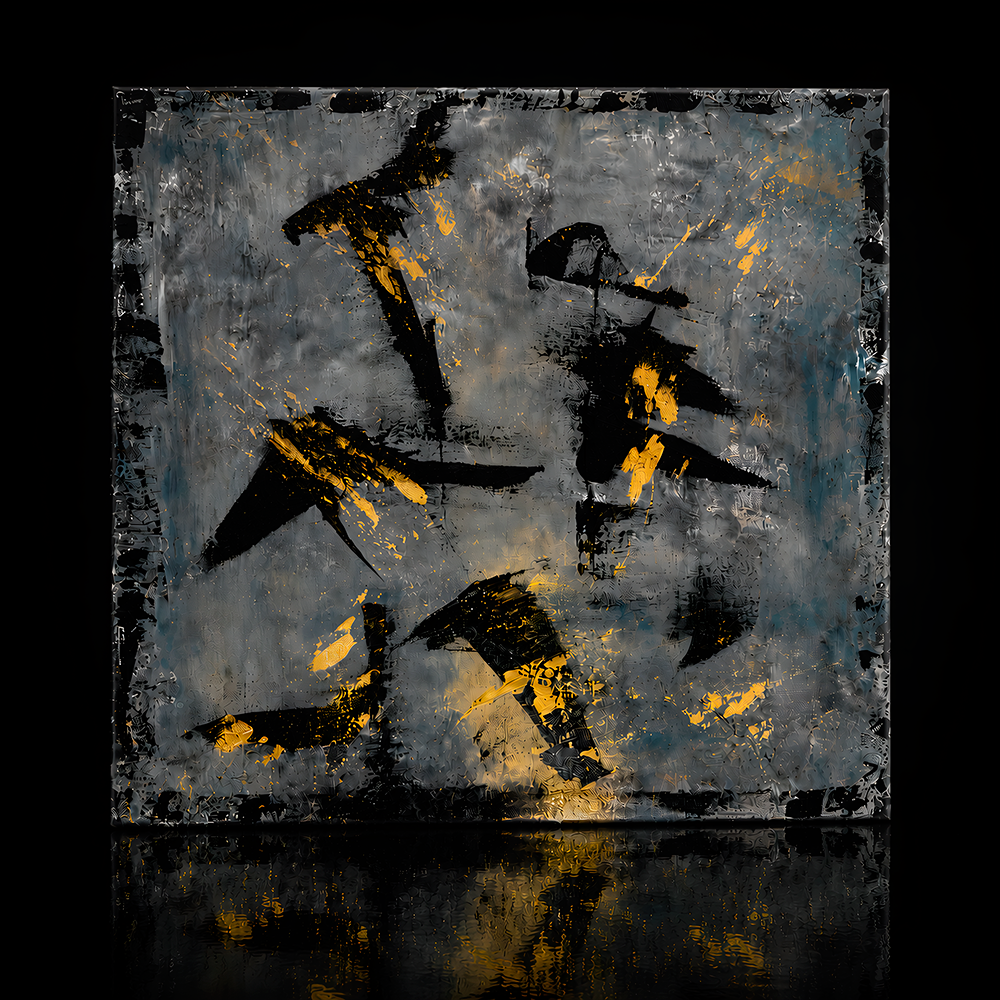
Matyas Nagy | Silence | 2026
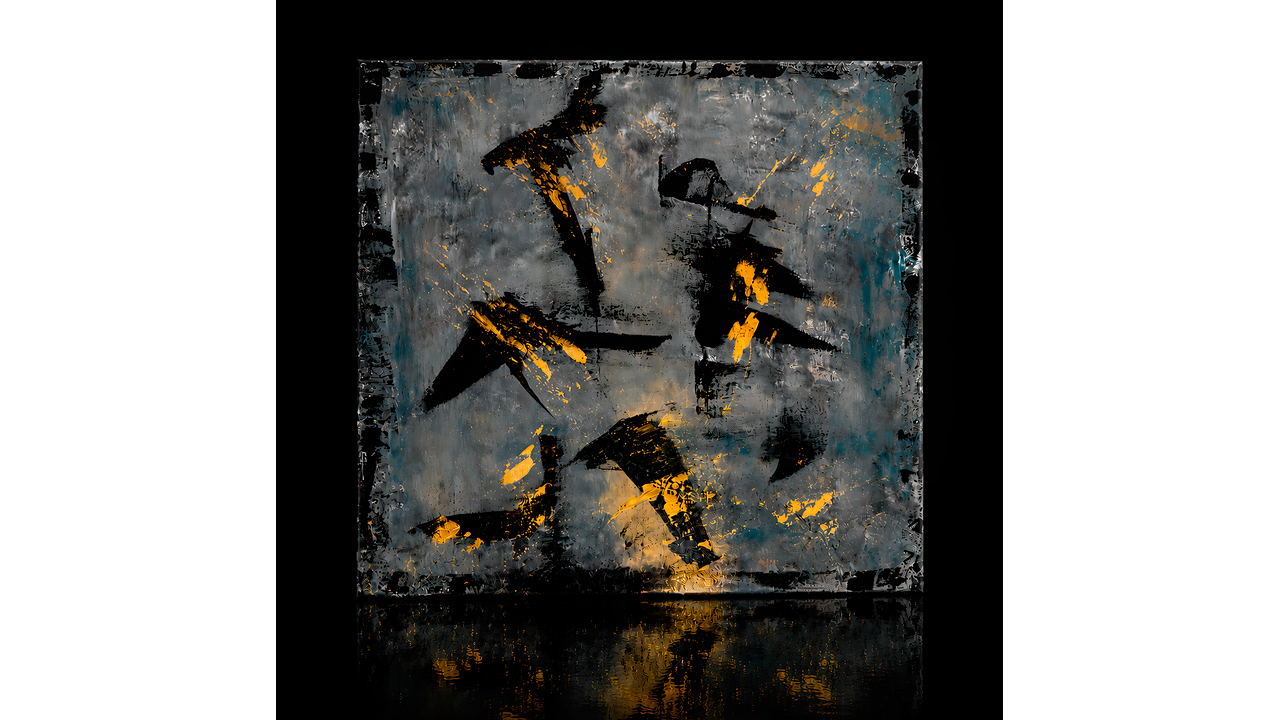
Silence is perhaps the most accomplished piece: black calligraphic strokes, recalling East Asian brushwork and Franz Kline’s gestural architecture, float on a smoky grey ground, while touches of saffron yellow keep the stillness from turning inert. Its paradox — loud marks that produce quiet — is exactly what the title promises. Desires, in black, oxblood red and tarnished gold, is the most enclosed of the group, its vertical scrapes and silvery encrustations suggesting something glimpsed behind a curtain.
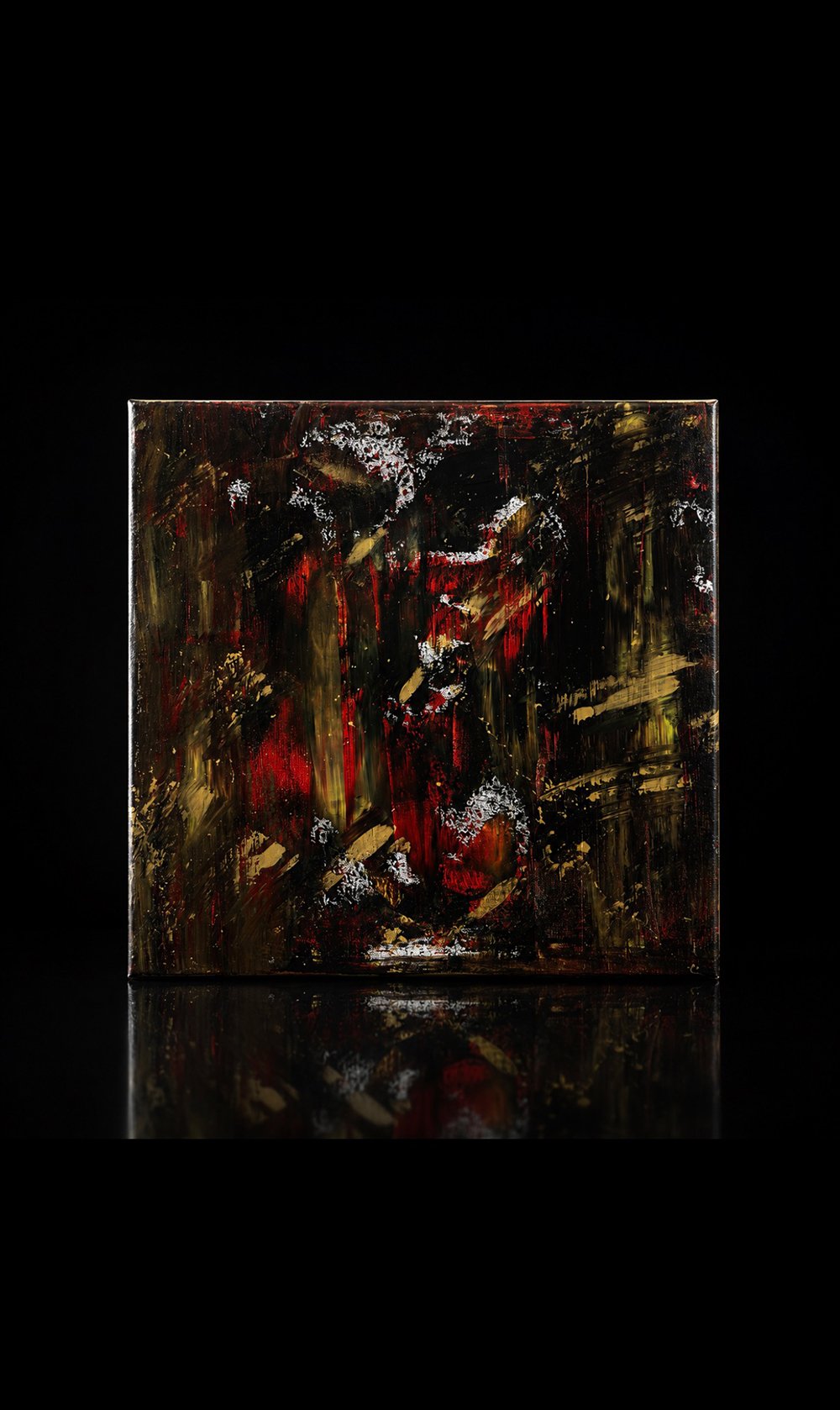
Matyas Nagy | Desires | 2026
The triptych Zavara Collage carries the glossy, resin-like surface into a larger narrative: sandy bronze ground and pools of vivid blue shift across three panels, so that the central diamond reads as a lagoon between two coastlines. It shows an ability to think beyond the single canvas and to treat the gaps between panels as part of the composition.
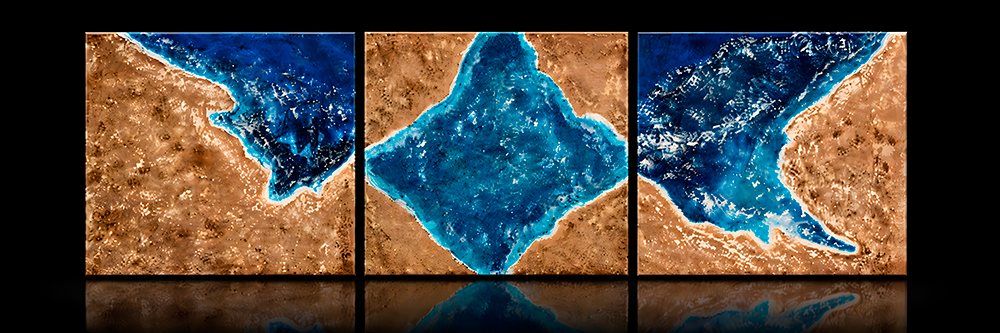
Matyas Nagy | Zavara Collage | 2026
The artist’s strongest asset is surface. Texture, gloss and layering carry as much meaning as colour, and the photographic presentation — each work isolated against black and mirrored in a reflective floor — amplifies this, lending the paintings an almost sculptural presence. The challenge ahead is consolidation: the series still explores several languages at once, from dispersed, all-over gesture to single-motif compositions. Allowing one or two of these directions to deepen across a sustained body of work will sharpen an already distinctive voice.
For so young a practice, these paintings show unusual conviction. They keep the promise of the artist’s statement: not to recreate reality, but to preserve what was felt — and to make that feeling legible to someone else.